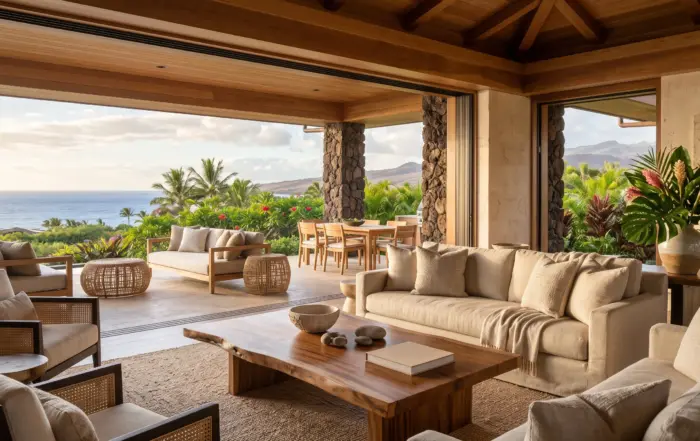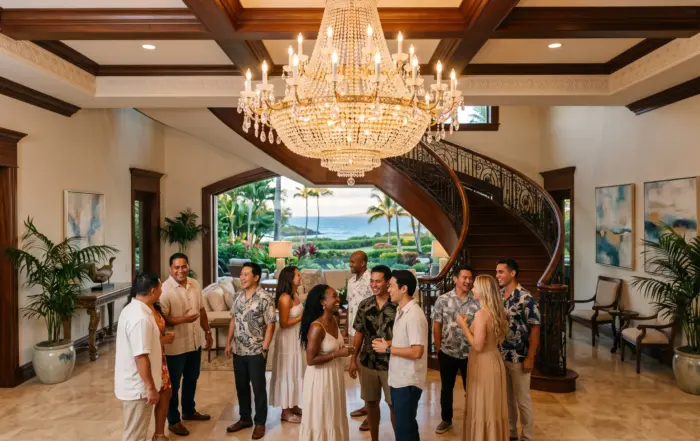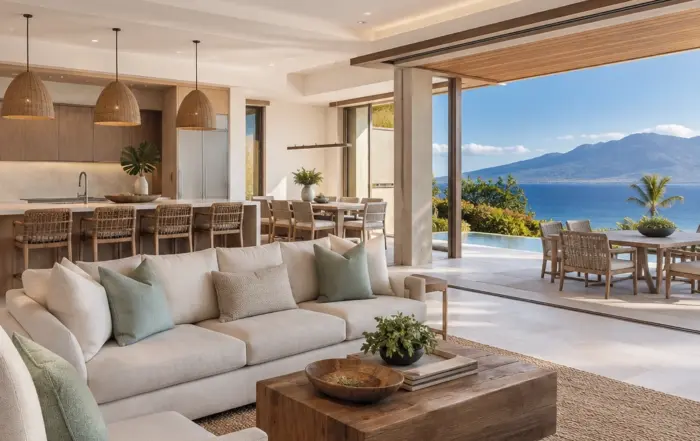
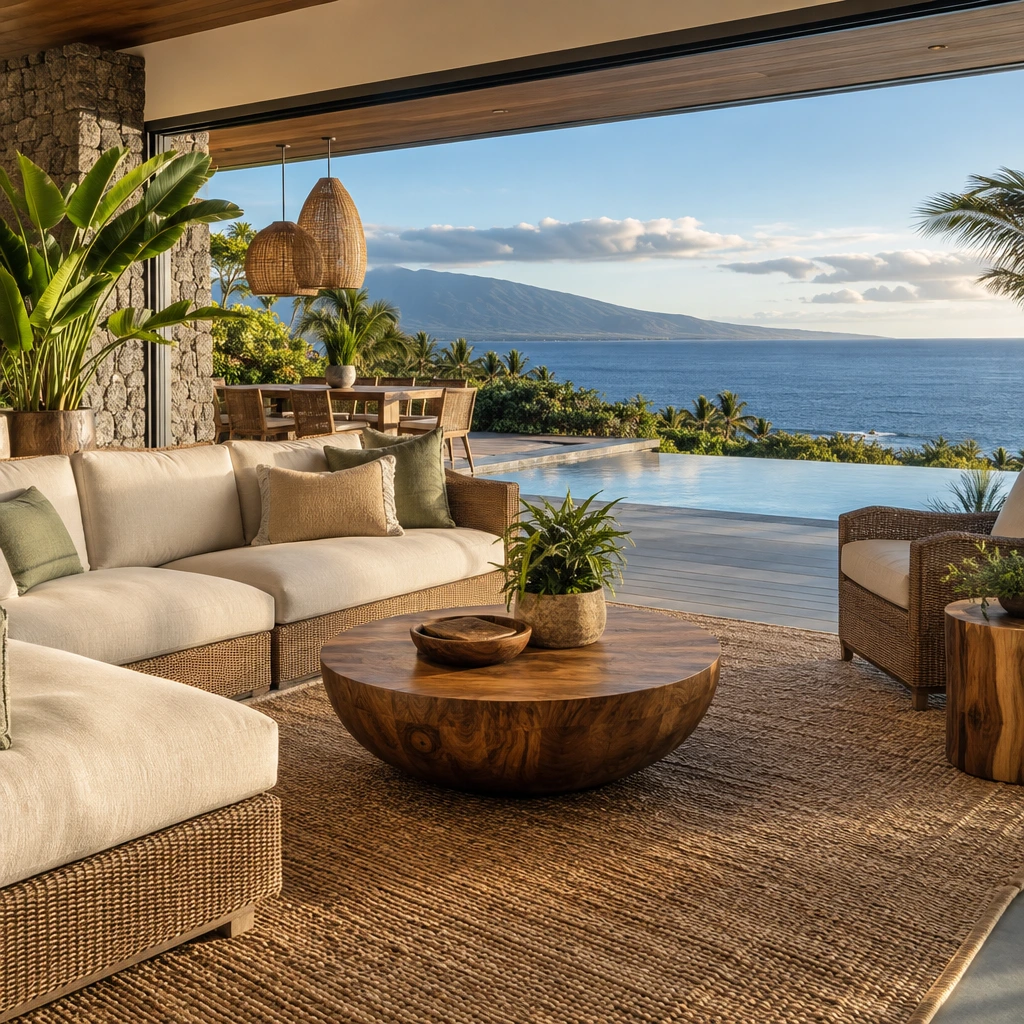
Maui furniture sourcing in 2026 requires more planning, better logistics, and greater attention to climate than simply choosing attractive pieces. For most Maui homes, the practical answer is to combine quick-ship and in-stock furnishings with carefully selected custom pieces, then allow approximately 8–12 weeks for production and freight. That schedule can lengthen when upholstery, imported materials, port handling, or inter-island delivery are involved.
Furniture demand is also changing. Manufacturers are offering more fabrics, finishes, and smaller production runs while clients expect shorter lead times and durable materials. At the same time, Maui’s intense sun, salt air, humidity, wind, and seasonal occupancy place demands on furniture that mainland design advice does not always address. This guide explains how to plan furniture lead times, select resilient furnishings for Maui’s microclimates, and use 2026 design trends without sacrificing performance.
By Valorie Spence, ASID, owner of IDS Maui, designing Hawaii homes since 1999.
How Is Maui Furniture Sourcing Changing in 2026?
The biggest change is that sourcing now involves two schedules instead of one: the manufacturer’s schedule and the Hawaii logistics schedule. A sofa may require several weeks to make, but that is only the beginning. It must be inspected, consolidated, transported to a mainland freight terminal, shipped across the Pacific, transferred for Maui delivery, and coordinated with receiving and installation.
Industry data shows why it is wise to avoid overly optimistic promises. According to Smith Leonard’s Furniture Insights reports, residential furniture orders, shipments, and backlogs all showed year-over-year growth during 2026. More demand can mean healthier production, but it can also keep popular upholstery lines, performance fabrics, and custom finishes in active backlogs.
At the same time, furniture manufacturers are responding with more flexible production. A 2026 overview from Lectra on upholstered-furniture trends identifies smaller production series, more product variations, shorter expected lead times, and continued demand for durable materials. That creates more choice, but it also makes each specification more important. A fabric substitution, discontinued finish, or backordered cushion material can affect the entire installation date.
For a Maui project, the most reliable approach is to separate furnishings into three categories:
- Immediate or quick-ship items: pieces available from stock or with a short production window.
- Planned custom pieces: sofas, dining chairs, beds, rugs, and case goods that need specific dimensions, finishes, or fabrics.
- Flexible finishing layers: pillows, art, accessories, occasional tables, and lamps that can be substituted without disrupting the room plan.
This layered approach keeps the home functional while longer-lead pieces are in production. It is particularly useful for owners who live off-island, are furnishing a second home, or need the property ready for a specific arrival date.
How Long Does It Take to Furnish a Maui Home?
A typical full-home furnishing project should be planned around 8–12 weeks for production plus freight, although the total timeline depends on the number of custom items, the origin of the goods, the project’s location, and whether construction is complete. In practice, a home with several custom upholstery pieces may require more time than a condo furnished primarily with quick-ship products.
Why freight adds time after production
Ocean freight is not the same as mainland parcel delivery. XPO explains that Hawaii-bound freight commonly moves through the Port of Los Angeles, travels by ocean to Oahu, and then continues to neighboring islands by inter-island barge. Its published schedule lists approximately 13 days of transit to Maui from Los Angeles, followed by delivery processes that may take additional time. See XPO’s Hawaii freight-shipping information for the transportation sequence and scheduling requirements.
That transit estimate does not include the time needed to collect freight from a manufacturer, prepare it for shipment, consolidate multiple orders, clear receiving, inspect for damage, resolve a claim, or schedule final delivery and installation. Weather, sailing schedules, port congestion, and the availability of a complete shipment can also affect the date.
When should Maui homeowners place orders?
If the goal is a holiday visit or January arrival, orders are typically best placed by August. Earlier planning is appropriate for a new build because furniture dimensions, rug sizes, lighting locations, built-ins, and window treatments often depend on architectural decisions.
IDS Maui manages the process through room-by-room composition sheets and 3D renderings approved by email. That allows an owner to make decisions remotely while purchasing, receiving, freight claims, and installation continue on Maui. A clear approval calendar is essential: delayed fabric selections or unanswered questions can move the entire sequence.
Before approving an order, ask for:
- The estimated production window and what starts the clock.
- The freight method, destination, and whether delivery is dock-to-dock or to the home.
- The receiving, inspection, storage, and installation plan.
- A substitution process if a fabric, finish, or item becomes unavailable.
What Furniture Holds Up to Maui’s Sun, Salt Air, and Humidity?
Resilient furnishings Maui homeowners can live with comfortably are selected according to location, not just appearance. South Maui areas such as Wailea, Makena, and Kihei receive intense sun and salt exposure. West Maui communities including Kaanapali, Kapalua, Napili, and Lahaina face similar leeward conditions. Upcountry areas such as Makawao, Kula, Pukalani, and Haiku are cooler and often damper, which increases the need to consider mildew, moisture, and warmer material palettes.
For sunny or coastal rooms, look for performance upholstery with documented resistance to staining, fading, and frequent cleaning. Outdoor-rated fabrics can be appropriate indoors when the design calls for casual durability, but they should still feel comfortable and refined. For upholstery frames, kiln-dried hardwood, quality joinery, replaceable cushions, and corrosion-resistant hardware are more important than a trend label.
For lanais, choose materials designed for exterior exposure rather than moving indoor furniture outdoors temporarily. Aluminum, teak, selected synthetic fibers, and marine-grade finishes can perform well when properly specified. Even durable pieces need protection: cushions should be stored during extended absences, furniture should be cleaned of salt residue, and drainage should be maintained.
Upcountry homes require a different strategy. Natural fibers such as jute and sisal can be attractive but may be vulnerable to moisture in humid rooms. Wool rugs are often a better choice for bedrooms and dry interior spaces, while performance or indoor/outdoor rugs can work well in high-traffic areas and lanais. Leather may be comfortable and durable, but direct sun and heat can dry or discolor it, so placement and window protection matter.
Rattan and woven materials can suit Hawaii beautifully when they are used in the right environment. Interior-grade woven pieces should not be treated as maintenance-free in damp areas. Ventilation, dehumidification, regular inspection, and sensible placement are part of the furnishing plan.
Which 2026 Maui Trends Are Worth Using?
The strongest 2026 Maui trends are not disposable fashion statements. They are design directions that support comfort, flexibility, and long-term use.
Natural materials with performance upgrades
Clients continue to want relaxed textures, woven details, warm woods, linen-like fabrics, and indoor-outdoor connections. In Maui, these materials work best when paired with performance construction. A textured performance fabric can provide the visual softness of linen while tolerating more practical use. A wood table can be sealed appropriately for its location rather than left vulnerable to moisture and salt.
Smaller-scale customization
One important 2026 direction is more choice in smaller production runs. Instead of selecting an entirely standard room, homeowners can customize a sofa fabric, chair finish, rug size, or lighting combination without commissioning every element from scratch. This is useful for Maui homes because the design can remain personal while the schedule is protected with quick-ship companion pieces.
Layered lighting and comfortable outdoor rooms
Layered lighting remains valuable because Maui homes often transition between bright daylight and low evening light. Use ceiling fixtures, lamps, sconces, task lighting, and dimmers rather than relying on one overhead source. For outdoor areas, select fixtures that are appropriate for exposure and verify local requirements. Maui County’s outdoor-lighting rules address shielding and the direction of emitted light; the Maui County outdoor-lighting ordinance defines fully shielded fixtures and establishes requirements for outdoor lighting.
For vaulted ceilings, fans and appropriately scaled fixtures can improve comfort without making the room feel overly mechanical. In homes designed for cross-breezes, louvers, operable windows, and thoughtful furniture placement can support passive cooling. The best trend is therefore not a particular color or silhouette. It is a home that feels calm, breathable, useful, and easy to maintain.
Can I Furnish My Maui Home From the Mainland?
Yes, but mainland purchasing is most successful when one person or team manages the complete chain from specification through installation. Ordering individual pieces online can create mismatched dimensions, separate freight bills, uncertain damage responsibility, and delivery dates that do not align.
A Maui designer can coordinate mainland vendors, consolidate orders where practical, arrange receiving, document condition, manage freight claims, and schedule installation. This is especially important for seasonal residents. Before leaving the island, address humidity control, mildew prevention, termite risk, salt exposure, hurricane-season lanai storage, and property-manager access.
For a new build or major remodel, bring the designer in before electrical and drywall work begins. Lighting plans, plumbing and appliance selections, built-ins, cabinet details, fan locations, and furniture clearances are interconnected. IDS Maui works with architects, contractors, and design-build partners so that furniture does not become an afterthought once walls and outlets are fixed.
Maui home recovery and rebuilding projects also require patience and sensitivity. Whether the project is in Lahaina, Kula, or another community, the furnishing plan should follow the homeowner’s construction schedule, insurance process, storage needs, and personal priorities rather than forcing a rushed design decision.
What Is the Best Maui Furniture Sourcing Strategy for 2026?
The best strategy is to begin earlier, specify for the microclimate, and build flexibility into the order. Choose the pieces that define the room first, then protect the installation date with quick-ship alternatives and approved substitutions. Treat freight as part of the design schedule, not as an administrative detail at the end.
For remote owners, IDS Maui provides a coordinated process from composition sheets and renderings through purchasing, receiving, freight claims, and installation. The result is a home that can be ready when the owner arrives rather than a collection of boxes waiting at the port or warehouse.
Frequently asked questions
How much does an interior designer cost on Maui?
Fees vary by scope, project size, and level of service. A consultation, furnishing plan, full-service design, and construction coordination are different services, so request a written proposal describing what is included.
How much is freight to Hawaii?
There is no single price. Freight depends on cubic volume, weight, origin, consolidation, destination, delivery level, and installation. Request a project-specific estimate before approving major pieces.
What does “quick ship” mean?
Quick ship generally means an item uses a limited selection of in-stock materials or a shorter production program. It does not necessarily mean immediate delivery to Maui; production, ocean freight, receiving, and installation still need to be scheduled.
To discuss Maui furniture sourcing, resilient furnishings, or a remote furnishing project, call IDS Maui at 808-891-8800 or email the studio.

Meet Valorie, founder of IDS Maui, who has spent 23 years bringing colorful fabrics, clever space planning, and new technology into homes and workplaces across the Hawaiian Islands, so your project will embody the Hawaiian style.
Need Design Help With Your Maui Home?
Ask us anything — furniture, design, or where to start.