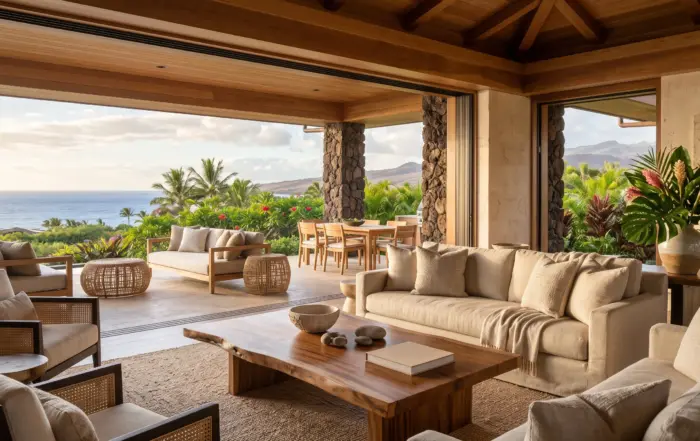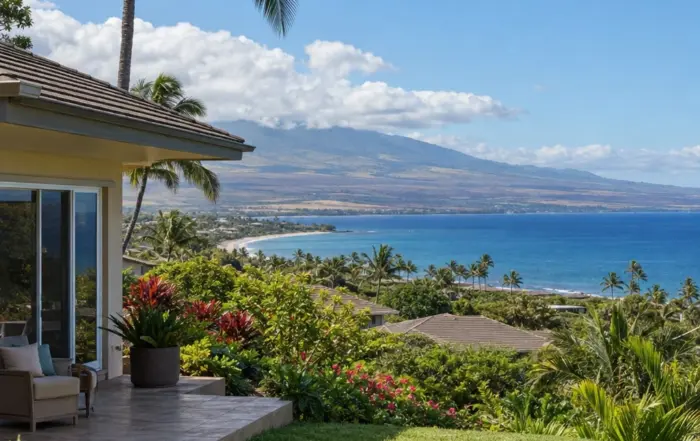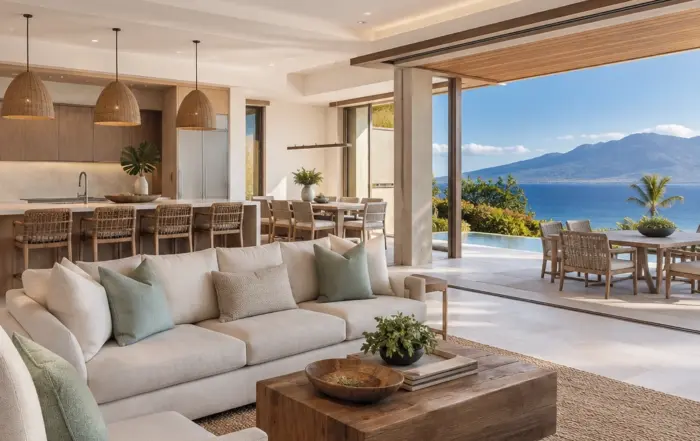
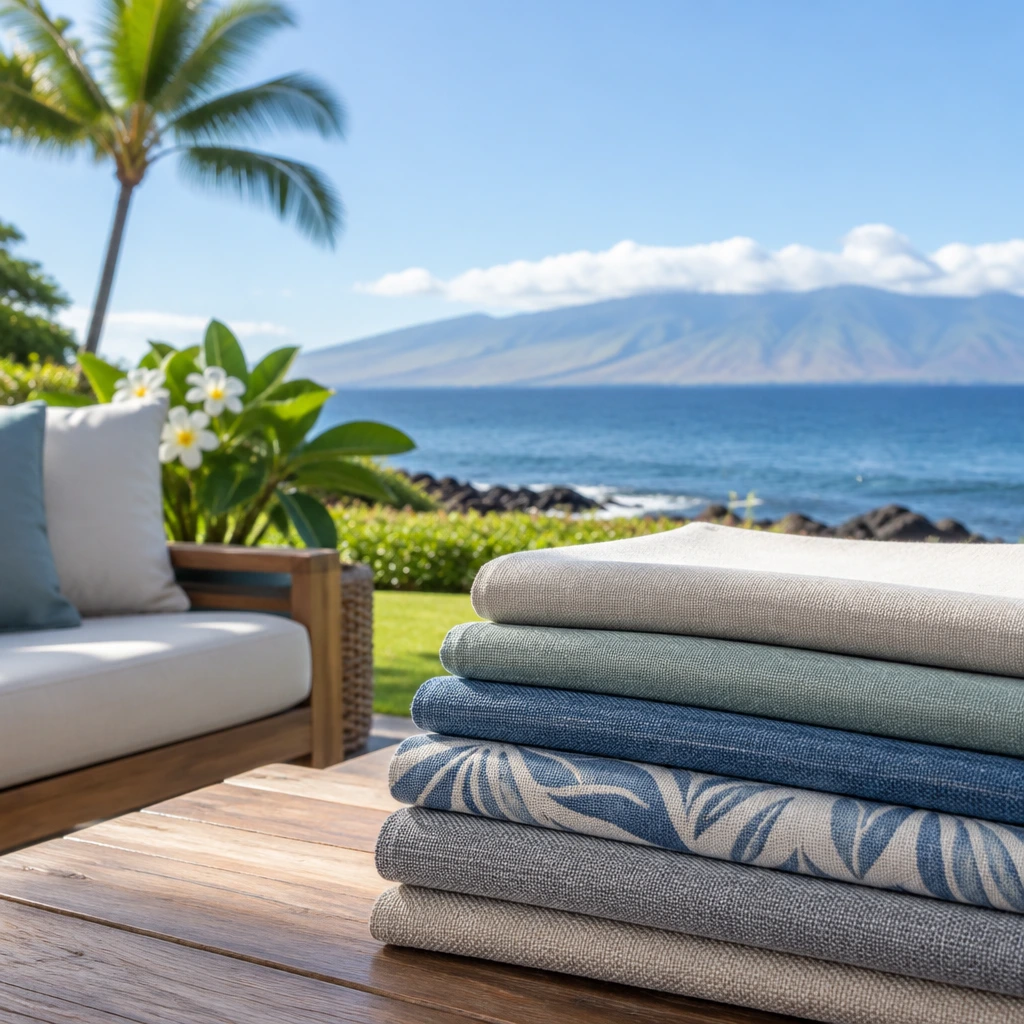
For Maui homes, the right fabrics are usually solution-dyed performance textiles, tightly woven upholstery, and breathable materials selected for the home’s specific microclimate. The best Maui climate fabrics resist intense ultraviolet light, salt air, humidity, mildew, and everyday wear without making a room feel commercial. A fabric that performs beautifully in dry, sunny Wailea may not be the best choice for a damp Upcountry home in Kula or a windward property in Hana.
Climate is only one part of the decision. Furniture placement, ventilation, window exposure, cleaning routines, pets, rental use, and whether the home sits empty for months all affect how textiles age. This guide explains how to select durable fabrics for Hawaii homes, where natural fibers still make sense, and how an interior designer can coordinate furniture, window treatments, rugs, and outdoor spaces as one cohesive plan.
Byline: Valorie Spence, ASID, owner of IDS Maui, designing Hawaii homes since 1999.
Which Maui climate fabrics work best in each Maui microclimate?
Maui does not have one uniform climate. South Maui communities such as Wailea, Makena, and Kihei typically experience strong sun, heat, and salt air. West Maui locations including Kaanapali, Kapalua, Napili, and Lahaina face similar UV and ocean exposure, although wind and elevation can change conditions from one property to the next. Upcountry homes in Makawao, Kula, Pukalani, and Haiku are cooler and often damper, making mildew prevention and airflow especially important. Paia, Spreckelsville, and Hana are windward and humid, with moisture and rust concerns.
For bright, leeward rooms, look for fabrics labeled solution-dyed acrylic, performance polyester, or other UV-tested textiles. Solution-dyed fibers have color infused throughout the fiber rather than applied only to the surface, so they generally resist fading better than conventionally dyed fabrics. They are useful on sofas near large windows, dining chairs, window seats, and covered lanais.
In Upcountry and windward homes, prioritize breathable construction, quick-drying performance, and fabrics that can be cleaned without trapping moisture. A mildew-resistant treatment may help, but no fabric is mildew-proof if cushions remain damp or a room is closed up without ventilation. Removable cushion covers, moisture management, and regular air circulation remain essential.
- Sunny South and West Maui: UV-tested performance fabrics, lined shades, and fade-resistant outdoor textiles.
- Upcountry Maui: breathable upholstery, washable or removable covers, and materials that do not retain dampness.
- North Shore and Hana: quick-drying textiles, corrosion-conscious hardware, and fabrics suited to wind-driven moisture.
- Any coastal home: tightly woven fabrics, low-maintenance finishes, and cushions that can be moved away from direct salt exposure.
The showroom at IDS Maui is in Makawao, where material selections can be considered in relation to Upcountry conditions while still being tailored to a home in any Maui neighborhood.
What makes a fabric durable for a Hawaii home?
Durability is more than a high abrasion number. A successful upholstery fabric must handle the way a room is actually used, including sandy feet, wet swimwear, sunscreen, pets, children, frequent entertaining, and direct sunlight. It should also coordinate with the furniture’s frame, cushion fill, seam design, and location in the room.
How should you compare performance ratings?
Ask the manufacturer or designer for the fabric’s cleaning code, lightfastness information, and abrasion rating. For heavily used seating, a textile tested at approximately 30,000 double rubs or more may be appropriate, but abrasion tests are not a complete prediction of real-world performance. A fabric can have a high rating and still fade quickly if it is not UV resistant. Conversely, a lower-rated textile may be perfectly suitable for a decorative chair or lightly used bedroom.
For Maui upholstery, also evaluate the weave. Tight, stable weaves tend to resist snagging and sand better than loose bouclé or open textures. Patterned fabrics can disguise small marks, while medium-scale prints help soften the visual effect of wear. Performance velvet may work well indoors, but it should be evaluated carefully for heat, direct sun, and cleaning requirements before being used on a lanai or exposed window seat.
Which furniture materials pair well with durable fabrics?
Furniture materials in Maui should support the same maintenance plan as the textile. Powder-coated aluminum, properly finished hardwood, teak, and quality engineered materials can be effective choices, depending on whether the piece is indoors or outside. Outdoor furniture still needs protection from standing water, salt, and prolonged sun; “outdoor” does not mean maintenance-free.
Rattan can be attractive in Hawaii, especially in a dry, covered, well-ventilated room. Natural rattan, cane, jute, and sisal are more vulnerable to moisture than synthetic alternatives, so they require thoughtful placement in humid homes. Synthetic wicker may be a better choice for a covered lanai. Leather can work well indoors because it is durable and easy to wipe, but direct sun and heat can dry or discolor it. Keep leather away from unfiltered afternoon exposure and confirm the care requirements before selecting a pale finish.
How should you choose fabrics for lanais, windows, and vacation rentals?
Outdoor and high-use fabrics need a more rigorous plan than a decorative indoor textile. On a lanai, choose materials specifically rated for outdoor use, with UV resistance, quick-drying performance, and construction suited to the amount of exposure. Marine-grade or corrosion-resistant hardware can protect nearby drapery and shade systems, while breathable cushion inserts help prevent moisture from remaining inside the seat.
Use washable or replaceable covers where possible. A zipper is useful, but the cover must also be designed to fit correctly after cleaning. Store loose pillows and sensitive textiles during extended vacancy, heavy weather, or hurricane season. A property manager can include cushion airing, shade operation, and moisture checks in the home’s regular care routine.
Window treatments deserve equal attention. Unlined decorative panels can fade rapidly in a west-facing room. Solar shades, lined draperies, shutters, and woven shades can reduce glare and UV exposure while preserving the view. The correct solution depends on the window’s orientation, the home’s ventilation, and whether the priority is cooling, privacy, or filtered light.
For a vacation rental, performance fabric is not a substitute for good design. Seating should be comfortable, durable, and easy to reset between guests. Contract-grade textiles, robust case goods, sleeper sofas where appropriate, and an owner’s closet can make turnover easier. Owners planning a long-term rental, personal-use home, or sale may need a different furnishing strategy. For properties affected by changing Maui County short-term-rental rules, verify current requirements with Maui County; regulations can change, and design guidance is not legal advice.
How can an interior designer manage fabric selections for an off-island owner?
Many Maui homeowners live off-island for much of the year. That makes textile selection more complex because samples, approvals, purchasing, receiving, freight, installation, and future care must be coordinated without the owner being present. IDS Maui manages projects remotely with room-by-room composition sheets, finish samples, and 3D renderings approved by email.
A remote process should identify fabric priorities before ordering begins. For every upholstered item, document the room, intended use, exposure to sunlight, cleaning code, selected color, pattern direction, and any alternate material. This prevents a beautiful but unsuitable textile from being substituted late in the process. It also gives the owner and property manager a practical reference after installation.
Furniture, cabinetry, stone, and textiles often ship to Maui, so lead times and freight planning matter. Custom and special-order pieces commonly require 8–12 weeks of production plus freight. Orders placed by August are typically better positioned for a holiday or January arrival, although availability and shipping schedules vary. Freight to Hawaii is not one fixed price: it depends on the item’s dimensions, weight, origin, packing method, consolidation, delivery location, and whether inside delivery or installation is required. A designer should request a project-specific estimate before approval.
While the owner is away, IDS can coordinate receiving, inspect shipments, manage freight claims, and schedule installation so the home is ready on arrival. Property managers can also receive a care plan covering humidity, mildew, salt residue, termites, and lanai storage. Before leaving a Maui home for the off-season, close attention to airflow and moisture is particularly important. Fabric selection works best when it is part of a complete ownership plan rather than an isolated color decision.
What is the best way to balance style, comfort, and fabric performance?
The strongest Maui interiors do not look like commercial spaces. They use performance textiles in natural colors, relaxed patterns, and tactile weaves that reflect the island’s landscape. A durable sofa can be paired with a softer accent chair in a less exposed position. A wool rug may be comfortable in a dry bedroom, while a performance indoor-outdoor rug is more practical for a great room that opens to the lanai.
Be cautious with jute and sisal in humid areas. These natural fibers can absorb moisture and develop odor or mildew when placed in damp rooms or homes that remain closed. Wool can be a good bedroom option when the room is dry and properly ventilated, but it still needs routine cleaning and protection from prolonged dampness.
Color also affects longevity. Pale fabrics can look elegant and keep rooms cool visually, but they show sunscreen, dust, and food marks more readily. Deep colors may absorb more heat in direct sun and reveal salt residue. Mid-tone neutrals, subtle texture, and carefully placed washable accents often provide the best balance.
Start with the room’s exposure and use, then select the construction, performance rating, and care requirements. Only after those decisions should you finalize color and pattern. That order allows the design to remain beautiful without sacrificing practical performance.
Conclusion: How can IDS Maui help you choose durable fabrics?
Choosing fabrics for Maui means responding to the island’s microclimates, not simply selecting a material labeled “performance.” The right solution may be solution-dyed acrylic in a sunny Wailea living room, breathable upholstery in Kula, quick-drying lanai cushions in Hana, or carefully protected leather in a shaded indoor space. Furniture materials, window treatments, rugs, ventilation, and maintenance should all support the same goal.
IDS Maui combines interior design experience with practical project management for homeowners in Makawao, Kihei, Wailea, Kaanapali, Kapalua, Lahaina, and throughout Maui. To discuss humidity-resistant fabrics, remote furnishing, or a complete home plan, call 808-891-8800 or email IDS Maui.
Frequently asked questions about Maui climate fabrics
Are performance fabrics always mildew-proof?
No. Performance fabrics may resist stains, moisture, or mildew better than conventional textiles, but damp cushions, poor ventilation, and closed-up rooms can still create problems. Keep fabrics dry, allow airflow, and follow the manufacturer’s cleaning instructions.
Is rattan or leather good for Hawaii?
Both can work indoors when correctly placed. Natural rattan is best in dry, covered, ventilated areas, while synthetic wicker is generally more suitable for humid or outdoor settings. Leather is durable indoors but should be protected from direct sun, heat, and excessive moisture.
Can IDS Maui furnish my home while I live on the mainland?
Yes. IDS Maui provides remote room-by-room composition sheets and 3D renderings for email approval, then coordinates purchasing, receiving, freight claims, and installation. Allow approximately 8–12 weeks for production plus freight, with timing dependent on each item’s availability and shipping requirements.

Meet Valorie, founder of IDS Maui, who has spent 23 years bringing colorful fabrics, clever space planning, and new technology into homes and workplaces across the Hawaiian Islands, so your project will embody the Hawaiian style.
Need Design Help With Your Maui Home?
Ask us anything — furniture, design, or where to start.