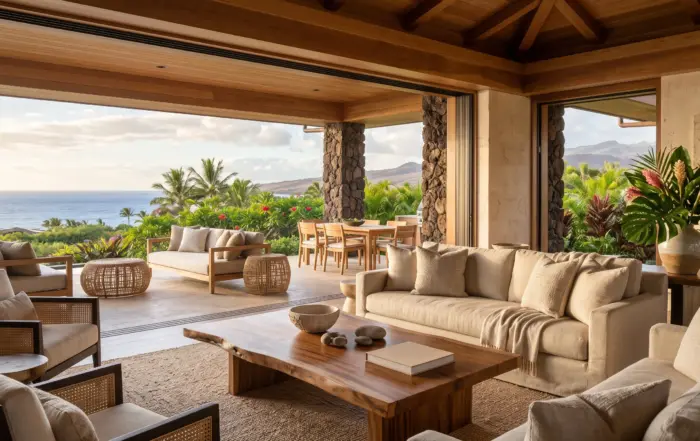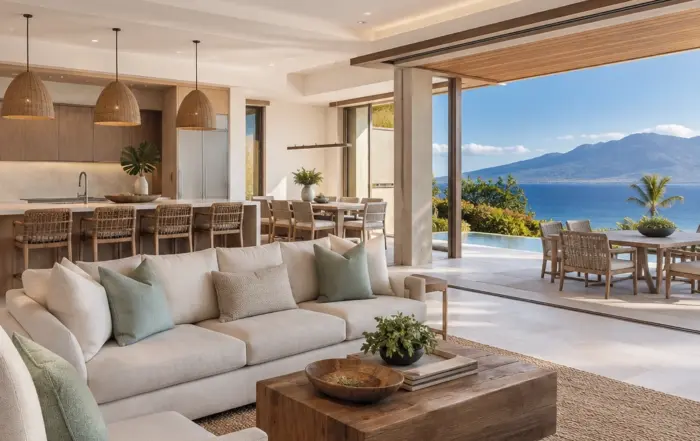
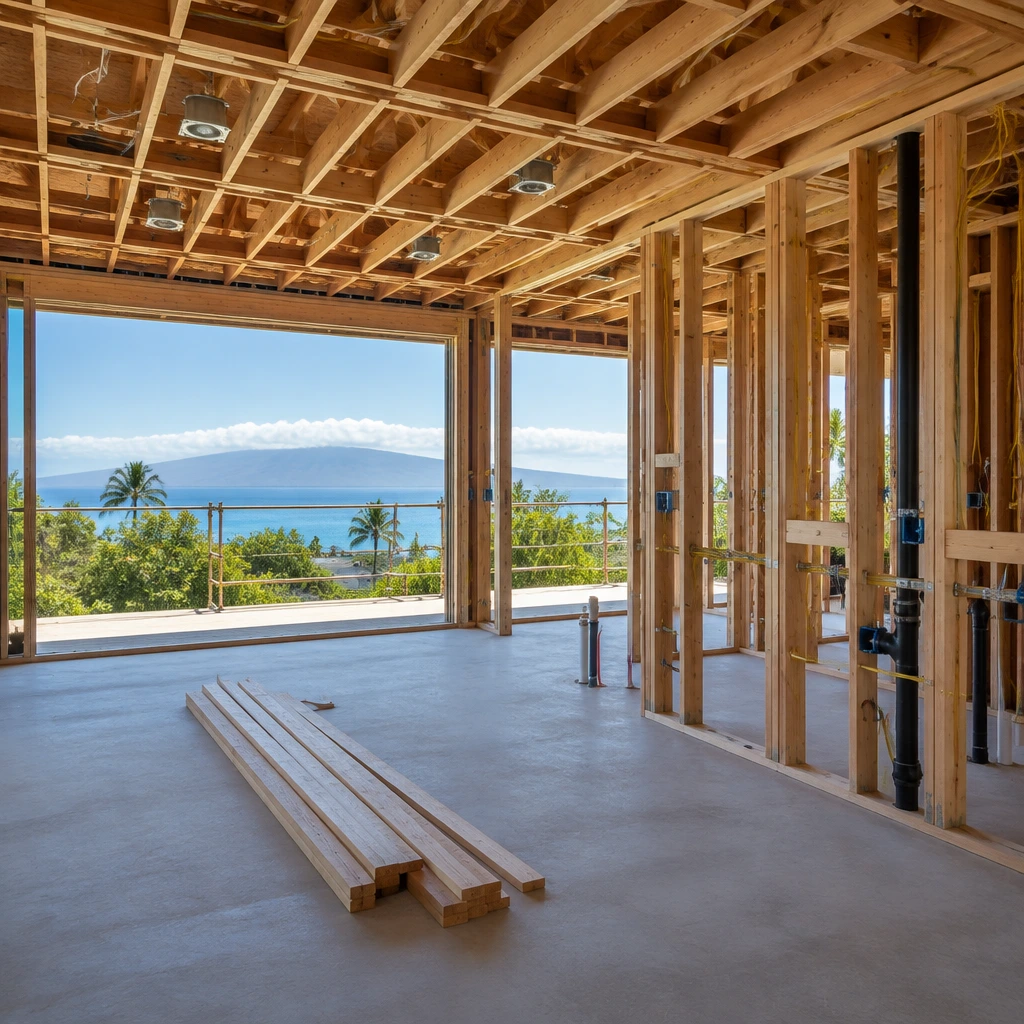
Decide everything that affects walls, ceilings, wiring, plumbing, and built-ins before drywall goes up. These pre-drywall design decisions Maui homeowners make early can determine whether a new home feels comfortable, cohesive, and easy to furnish—or requires expensive changes after construction is complete. In Maui, shipping lead times, salt air, humidity, intense sun, and different microclimates make early planning even more important.
Before insulation and drywall, your interior designer should be coordinating with the architect, builder, electrician, plumber, cabinetmaker, and appliance suppliers. This is when you finalize lighting locations, ceiling fans, outlets, plumbing fixtures, cabinetry, appliance dimensions, window treatments, and the relationship between indoor rooms and lanais. The decisions below will help you understand what must be settled, when to hire a designer for a new build in Maui, and how to prepare for a smoother installation.
Byline: Valorie Spence, ASID, owner of IDS Maui, designing Hawaii homes since 1999.
What are the essential pre-drywall design decisions Maui homeowners should make?
The most important rule is simple: if a decision affects a wall, ceiling, floor, or rough-in, make it before drywall. Moving a recessed light after the ceiling is finished is far more disruptive than adjusting the electrical plan while the framing is open. The same applies to plumbing, built-in cabinetry, wall-mounted televisions, and specialty appliances.
Finalize the locations that cannot easily move
Start with a room-by-room plan. Identify where furniture will sit, how people will walk through each space, and which walls need to remain visually quiet. Then confirm:
- Electrical outlets, USB outlets, floor outlets, and dedicated appliance circuits
- Switch locations, dimmers, three-way controls, and smart-home controls
- Television, speaker, security, internet, and motorized-shade wiring
- Plumbing locations for sinks, pot fillers, refrigerators, wet bars, and laundry equipment
- Recessed lights, decorative fixtures, sconces, pendants, and ceiling fans
- Built-in niches, shelving, benches, headboards, and storage walls
- Door swings, pocket doors, cabinet clearances, and appliance openings
A furniture plan is essential even when the home is months from completion. It prevents a sofa from blocking a lanai door, keeps bedside switches reachable, and ensures dining pendants are centered over the final table rather than merely centered in the room.
Resolve cabinets, appliances, and stone early
Cabinetry and appliances must work together dimensionally. Confirm the exact appliance models before cabinet production begins, including ventilation requirements, handle clearances, panel-ready specifications, and electrical connections. This is also the right time for built-in cabinet design Maui homeowners often need for media walls, entry storage, home offices, and primary suites.
Stone slabs, cabinet finishes, plumbing fixtures, and decorative hardware are not interchangeable placeholders. Since these products may be ordered on the mainland and shipped to the island, a late change can affect both the schedule and the installation sequence.
When should you hire an interior designer for a new build in Maui?
The best time is before electrical and drywall—ideally during architectural planning or immediately after the floor plan is developed. Hiring a designer after drywall limits the opportunity to coordinate the details that make a home feel intentional. For anyone searching “when to hire interior designer new build Maui,” the practical answer is: bring the designer in before rough-ins, not after finishes have been selected.
How does the designer work with the contractor and architect?
A designer should complement the construction team, not work around it. IDS Maui can coordinate with your architect and builder, review drawings, create room-by-room composition sheets, and provide specifications for finishes, fixtures, furnishings, and installation. Where appropriate, IDS also works with design-build partners.
During this phase, the team can review reflected ceiling plans, cabinet elevations, electrical drawings, finish schedules, and appliance specifications together. That coordination helps catch conflicts such as a pendant colliding with an open cabinet door, a wall sconce landing behind a mirror, or a ceiling fan being placed where a tall window treatment needs to stack.
What should be approved before construction moves forward?
Before drywall, aim to approve a coordinated package rather than isolated samples. It should include the floor plan, furniture layout, lighting plan, plumbing fixture schedule, cabinet elevations, finish selections, and a list of long-lead items. Three-dimensional renderings can be especially helpful for clients living off-island because they show how colors, scale, and circulation work together.
Remote clients can review and approve selections by email. IDS Maui manages purchasing, receiving, freight coordination, claims, and installation while owners are away, and can coordinate with property managers when necessary. This approach is particularly useful when the goal is to arrive at a finished home rather than manage a construction punch list from the mainland.
What belongs in a Maui home lighting plan before drywall?
A successful Maui home lighting plan uses layers instead of relying on a grid of ceiling cans. The plan should combine ambient light, task lighting, accent lighting, and decorative fixtures. It should also respond to the home’s orientation, window placement, ceiling height, and views.
Plan layers for everyday comfort
Ambient lighting provides general illumination. Task lighting supports cooking, reading, grooming, and work. Accent lighting highlights artwork, architectural details, or textured walls, while decorative fixtures contribute scale and personality. Dimmers and properly grouped controls allow one room to shift from bright daytime use to a calmer evening setting.
Before drywall, mark the exact locations for kitchen pendants, island lights, bathroom sconces, bedside reading lights, dining fixtures, stair lighting, and hallway controls. In vaulted rooms, confirm whether the fixture can be serviced and whether the ceiling fan has the correct downrod length. Fans are often essential in Maui, both for comfort and for reducing reliance on air conditioning.
How should lighting and ventilation respond to Maui’s climate?
South Maui communities such as Wailea, Makena, and Kihei, along with West Maui locations including Kaanapali, Kapalua, Napili, and Lahaina, receive intense sun and salt exposure. Exterior fixtures should use suitable marine-grade or corrosion-resistant finishes. Outdoor lighting should also be shielded and directed downward in accordance with Maui County requirements.
Upcountry homes in Makawao, Kula, Pukalani, and Haiku have cooler, damper conditions. Here, thoughtful ventilation, mildew-resistant materials, and warmer lighting can make rooms feel more comfortable. North Shore and Hana homes may need additional attention to wind, humidity, and rust. Louvers, operable windows, ceiling fans, and carefully planned cross-breezes can support cooling without treating every room as a sealed, air-conditioned box.
What materials and floor-plan decisions matter most for a Maui new build?
Material selections should follow the home’s microclimate and how the property will be used. A full-time Upcountry residence has different needs from a leeward vacation home or a condo near the ocean. In every case, choose materials that can handle moisture, UV exposure, sand, and regular indoor-outdoor movement.
Plan the lanai and indoor-outdoor connection first
Rather than treating the lanai as leftover space, plan it alongside the great room. Decide where outdoor dining, lounge seating, shade, fans, lighting, storage, and grilling equipment will go. Confirm door clearances and the location of outlets before the walls close. Furniture groupings should allow people to move easily between the kitchen, living room, pool, and outdoor areas.
For exposed locations, use performance fabrics, durable finishes, and outdoor-rated pieces. Natural fibers such as jute and sisal can be vulnerable to mildew in humid areas, while some untreated metals can corrode quickly in salt air. Rattan can work well when properly specified for the setting, but its suitability depends on construction, finish, ventilation, and whether it is intended for indoor or outdoor use. Leather may perform beautifully indoors, although direct sun and heat can affect certain finishes.
Allow for storage, guests, and ohana living
Decide early whether the home will include an ohana unit, guest suite, owner’s closet, home office, or flexible sleeping area. These uses affect plumbing, outlets, lighting controls, privacy, and built-in storage. A guest room may need a reading light on each side of the bed, luggage space, blackout shades, and an outlet where a phone can charge without crossing a walkway.
Built-in storage is especially valuable in a new home because it can be integrated into the framing and millwork plan. Consider entry drop zones, linen storage, beach-gear cabinets, laundry folding areas, and concealed equipment. Planning these features before drywall produces a cleaner result than adding freestanding storage later.
How long do Maui new build selections and freight take?
Selections should be substantially complete months before the expected move-in date. Cabinetry, stone, plumbing fixtures, lighting, appliances, and furniture may all require separate production and freight schedules. A typical furniture order can involve 8–12 weeks of production plus freight, and custom items may take longer.
For owners hoping to return for the holidays or in January, orders are typically best placed by August. That timing allows room for production, ocean or air freight, receiving, inspection, claims, and installation. It also provides a cushion for weather, port delays, backorders, or a damaged item that needs replacement.
How much is freight to Hawaii?
There is no single reliable freight price because the cost depends on the item’s size, weight, origin, shipping method, packaging, delivery location, and whether multiple pieces can be consolidated. A single oversized piece may cost more to ship than several smaller items packed together. Request a project-specific freight estimate before approving the order, and include receiving, storage, delivery, installation, and potential claims in the planning conversation.
IDS Maui can manage receiving and freight claims while an owner is off-island. That oversight is valuable because furniture should be inspected promptly, especially when a home is in a humid, salt-exposed, or remote location.
What should you decide before drywall in your Maui home?
Before the drywall crew arrives, approve the details that will be difficult or expensive to change later: lighting, wiring, plumbing, cabinetry, appliances, ceiling fans, built-ins, door clearances, window treatments, and lanai connections. A coordinated plan protects the construction schedule and gives your finished home better comfort, storage, lighting, and visual balance.
For Maui homeowners building from a distance, early design coordination also reduces uncertainty. IDS Maui can create room-by-room composition sheets and 3D renderings, coordinate with your architect and contractor, and manage purchasing through installation while you are away. Whether you are building in Wailea, Kula, Kihei, Makawao, or another Maui community, the right decisions before drywall create a stronger foundation for every finish that follows.
Frequently asked questions
Can I furnish my Maui home from the mainland?
Yes. IDS Maui works with off-island owners by email and can manage purchasing, receiving, freight claims, delivery, and installation. Room-by-room plans and 3D renderings help owners approve selections remotely.
What furniture holds up to salt air and humidity?
Look for performance fabrics, durable case goods, corrosion-resistant hardware, and finishes specified for the intended environment. Outdoor pieces should be rated for outdoor use, while indoor materials still need protection from direct sun and moisture.
Do you work with my contractor or architect?
Yes. IDS Maui coordinates with architects, builders, and design-build partners to align drawings, specifications, lighting, cabinetry, finishes, and furnishings before construction reaches the drywall stage.
To discuss your Maui new build design, call IDS Maui at 808-891-8800 or email the studio to begin planning before the walls close.

Meet Valorie, founder of IDS Maui, who has spent 23 years bringing colorful fabrics, clever space planning, and new technology into homes and workplaces across the Hawaiian Islands, so your project will embody the Hawaiian style.
Need Design Help With Your Maui Home?
Ask us anything — furniture, design, or where to start.