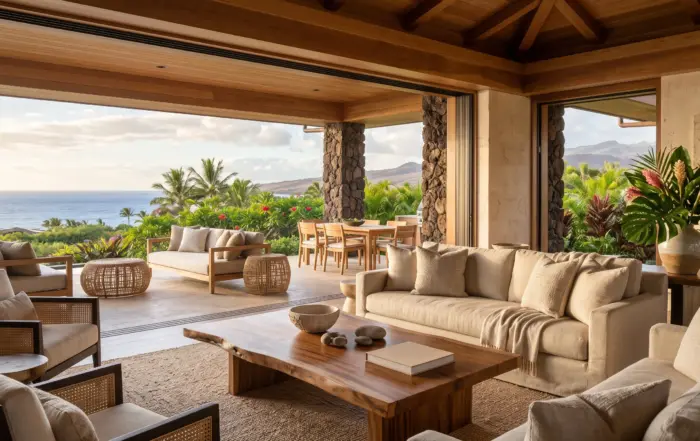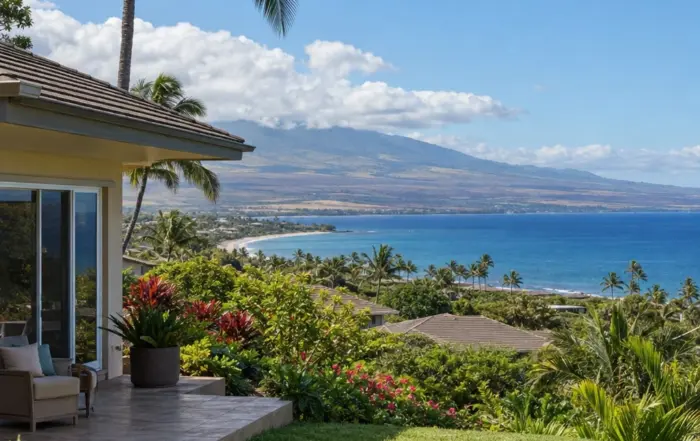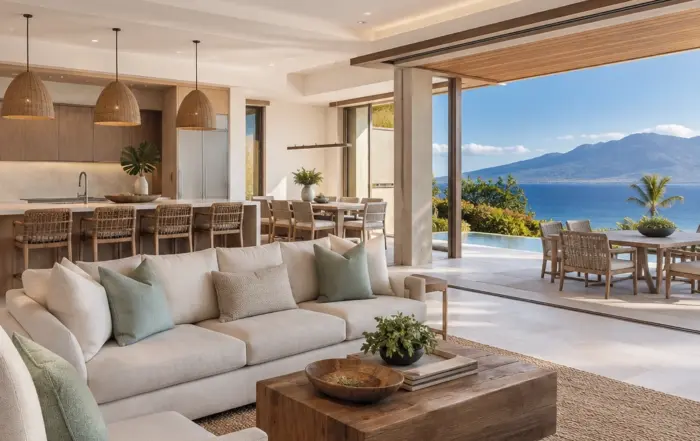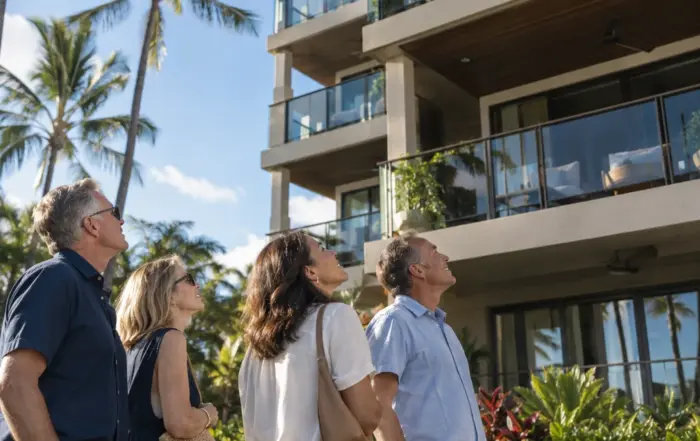
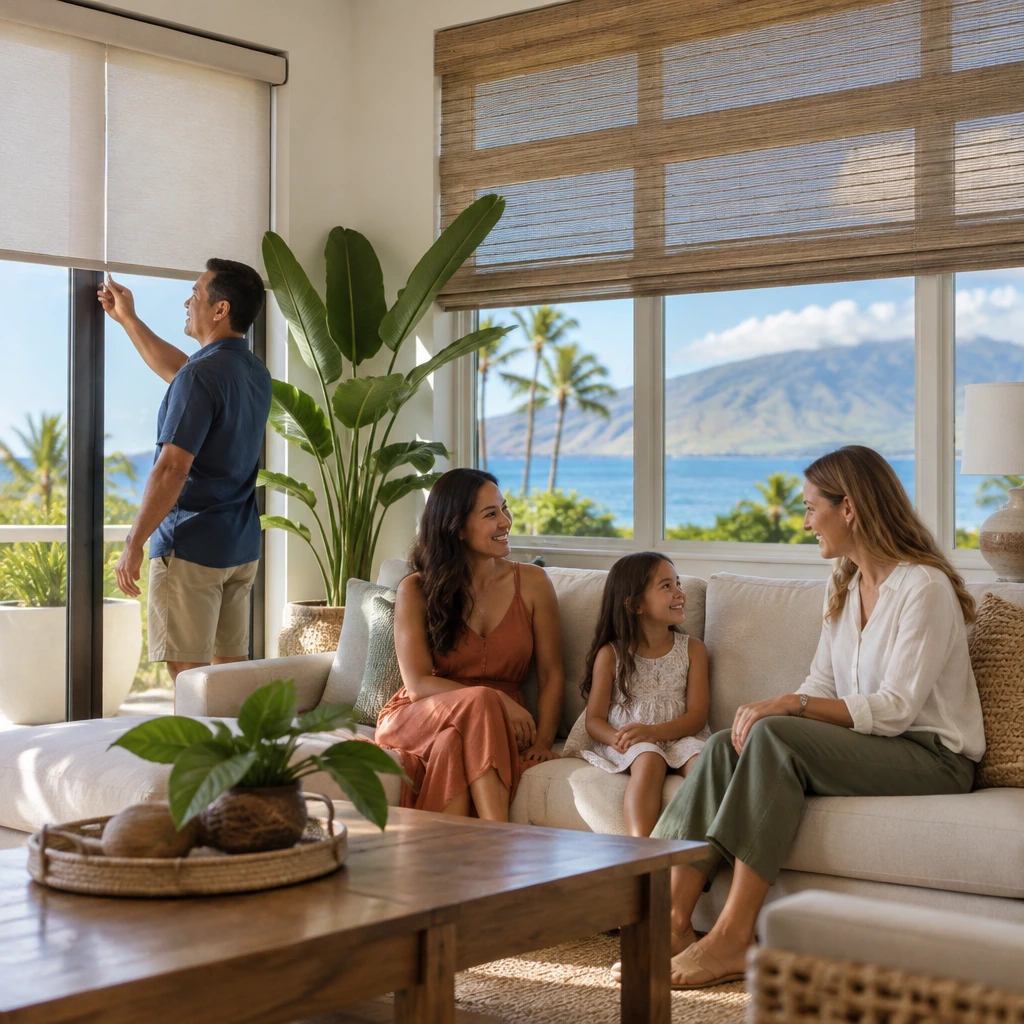
Smart window treatments can make a Maui home more resilient by reducing UV exposure, controlling solar heat, improving privacy, protecting furnishings, and helping rooms stay comfortable when owners are away. The right combination of motorized shades, durable fabrics, layered curtains, and carefully selected hardware responds to Maui’s varied microclimates rather than treating every window the same.
In Wailea, Makena, Kihei, Kaanapali, Kapalua, Napili, and Lahaina, intense sunlight and salt air can quickly fade floors, upholstery, artwork, and wood finishes. Upcountry homes in Makawao, Kula, Pukalani, and Haiku face cooler temperatures, damp air, and mildew concerns. North Shore areas such as Paia and Spreckelsville, along with Hana, experience more wind and humidity. This guide explains how Maui window treatments support a more durable home, what smart window designs can and cannot do, and how IDS Maui coordinates installations for full-time, seasonal, and remote homeowners.
By Valorie Spence, ASID, owner of IDS Maui, designing Hawaii homes since 1999.
How Do Smart Window Treatments Improve Maui Home Resilience?
The most effective approach combines passive protection with convenient automation. A solar shade can filter glare and UV during the brightest part of the day, while a blackout shade or lined drapery can provide privacy and nighttime comfort. Motorization adds another layer by allowing shades to operate on a schedule, through sensors, or remotely from a phone.
That matters in a seasonal home. A property may sit empty for weeks while sunlight continues to reach the same wood floors, rugs, cabinets, and furnishings. With programmed shades, window coverings can close during high-UV hours even when no one is on the island. Owners can also check and adjust them remotely before a storm, a hot afternoon, or an arrival.
What Can Automated Shades Protect?
- Furnishings: Reduced direct sunlight helps slow fading in fabrics, leather, artwork, flooring, and cabinetry.
- Interior temperatures: Solar-control materials limit heat gain near large glass doors and west-facing windows.
- Privacy: Scheduled adjustments provide privacy in bedrooms, bathrooms, and resort-style living spaces without keeping rooms dark all day.
- Energy use: Less solar heat can reduce the workload on air conditioning, particularly in South and West Maui.
- Convenience: A single control system can operate shades throughout the home, including hard-to-reach clerestory windows.
Smart treatments do not replace hurricane shutters, impact-rated glazing, or an emergency plan. They are an interior comfort and asset-protection system. During severe weather, homeowners should follow guidance from Maui County and their property manager, secure outdoor items, and use approved storm-protection measures.
Which Maui Window Treatments Handle Sun, Salt Air, and Humidity?
Material selection is central to a resilient design. A beautiful treatment that cannot tolerate Maui’s conditions may warp, corrode, mildew, or fade prematurely. The best solution depends on the room, exposure, ventilation, and whether the window opens to a lanai or another outdoor area.
Choosing Materials for Leeward and Windward Areas
South Maui and West Maui homes receive strong sun and often have expansive glass walls. Solar screen shades, woven shades with UV-filtering liners, and performance drapery can control glare while preserving the view. For a Wailea or Makena bedroom, a layered design may pair a light-filtering shade with blackout side panels. In a Kaanapali or Kapalua great room, large motorized shades can be divided into zones so the ocean view remains open where glare is not a concern.
North Shore and Hana homes need special attention to moisture and wind. Fabrics should be selected for breathability, cleanability, and resistance to mildew. Natural fibers can be attractive, but jute, sisal, and some loosely woven materials may not be appropriate in damp rooms without careful evaluation. In bathrooms, laundry rooms, and humid bedrooms, synthetic performance materials are often a more reliable choice.
For hardware near open lanais or salt-air exposure, use corrosion-resistant components and finishes intended for coastal environments. Even salt air resistant products benefit from routine cleaning. Dust and salt deposits should be removed according to the manufacturer’s instructions rather than allowed to accumulate on tracks, brackets, and motors.
Are Natural Materials Appropriate for Maui?
Yes, when they are used selectively. Bamboo and woven wood shades can provide warmth and texture in a Kula home or an Upcountry retreat, but they need the right lining, ventilation, and placement. A designer may recommend a performance liner, a synthetic alternative, or a different treatment in a window exposed to condensation or frequent rain.
The goal is not to eliminate natural materials. It is to place them where their appearance and performance make sense. A durable solar shade in a high-exposure living room can be balanced with a wool or linen-look treatment in a protected bedroom, creating a home that feels layered rather than overly technical.
How Should Smart Window Designs Work in Different Maui Rooms?
Every room has a different resilience priority. A one-size-fits-all package may be convenient, but it often wastes the opportunity to improve comfort and protect the home. IDS Maui develops room-by-room composition sheets and 3D renderings so owners can review fabric, color, opacity, hardware, and control options before ordering.
Living Rooms and Great Rooms
Open-plan rooms often have the greatest solar exposure and the most expensive furnishings. Large windows and sliding doors should be divided into practical zones. For example, shades on the west side can close during afternoon heat while north-facing windows remain open. This preserves daylight and views without treating the entire room as if it has the same exposure.
Layering also improves flexibility. A sheer or light-filtering shade can soften daytime glare, while decorative drapery adds texture and evening privacy. In vaulted spaces, motorized systems are especially useful because manually operated treatments may be difficult or unsafe to reach.
Bedrooms, Bathrooms, and Guest Suites
Bedrooms generally need darkness, privacy, and quiet operation. Blackout roller shades, cellular shades, or lined draperies can be programmed to open gradually in the morning. In a seasonal home, an owner may schedule shades to open partway each day for a lived-in appearance while still limiting direct UV exposure.
Bathrooms require moisture-conscious selections. Water-resistant materials, well-ventilated mounting positions, and simple cleaning routines are more important than delicate decorative details. Guest suites should be intuitive: visitors should be able to operate the shade without learning a complicated control system.
Lanai Doors and Indoor-Outdoor Spaces
Maui homes often depend on a strong connection between interior rooms and lanais. Treatments should stack or retract cleanly, avoid obstructing door operation, and tolerate frequent use. Outdoor shades may help manage low-angle sun and wind, but they must be specified for the installation and exposure. Indoor treatments should never be treated as a substitute for rated exterior weather protection.
Can Smart Shades Help When a Maui Homeowner Lives Off-Island?
Yes. Remote operation is one of the most practical benefits of smart window treatments for seasonal owners. IDS Maui works with clients who live on the mainland or elsewhere for much of the year, coordinating design approvals, purchasing, receiving, freight claims, installation, and property-manager communication while the owner is away.
The process can begin with room-by-room composition sheets and 3D renderings approved by email. This allows the owner to evaluate how a shade color works with flooring, upholstery, cabinetry, and natural light before production. Once selections are finalized, the project can move forward without requiring the owner to be present for every delivery or installation appointment.
What Should Owners Do Before Leaving Maui?
- Set shade schedules around the home’s strongest sun exposures.
- Confirm that motors, hubs, remotes, and Wi-Fi controls are working correctly.
- Clean or inspect tracks, fabrics, and hardware according to product instructions.
- Ask a property manager to report signs of condensation, mildew, corrosion, or stuck treatments.
- Secure lanai furniture and other outdoor items during hurricane season.
- Leave clear instructions for manual operation if internet service or power is interrupted.
Timing is important. Custom window treatments commonly require production time, and freight to Hawaii adds another variable. For broader furnishing projects, IDS Maui advises allowing approximately 8–12 weeks for production plus freight. Owners hoping to have a home ready for a holiday or January arrival should typically place orders by August, although exact timing depends on the selected products and current shipping schedules.
How Much Do Smart Window Treatments Cost on Maui?
There is no single Maui price because the investment depends on window size, quantity, fabric, lining, motorization, control integration, installation conditions, and freight. A simple manual shade for one standard window is very different from a motorized, hardwired system across a wall of sliding glass doors.
The most useful first step is to establish priorities. Some homeowners begin with west-facing rooms, bedrooms, or the spaces containing valuable furnishings. Others want a complete system coordinated with a new build or remodel. Phasing can make sense, but controls and electrical planning should be considered early so that future additions work with the original system.
For new construction, involve the designer before electrical and drywall decisions are finalized. Power locations, recessed pockets, trim details, ceiling conditions, and control wiring can affect the final appearance and installation cost. IDS Maui works with clients’ architects and contractors and can coordinate selections alongside cabinetry, lighting, plumbing, appliances, and other elements that must be finalized months before completion.
In an existing home, an on-site assessment can identify mounting limitations, uneven windows, moisture concerns, and the best location for hubs or control equipment. A resilient treatment plan should be attractive, serviceable, and realistic for the home’s daily use—not simply packed with technology.
Conclusion: Build a More Resilient Maui Home
Smart window treatments give Maui homeowners a practical way to manage intense sunlight, humidity, salt air, privacy, and seasonal occupancy. The strongest solution combines UV protection, durable materials, corrosion-conscious hardware, thoughtful layering, and automation designed around each room’s exposure.
Whether the home is in sunny Kihei, resort-oriented Wailea, coastal Kapalua, breezy Paia, or cooler Upcountry Maui, the right window treatment plan can protect interiors while preserving the island’s light and views. IDS Maui can develop selections, renderings, purchasing, freight coordination, and installation support for homeowners who are present or managing the project remotely.
Frequently Asked Questions About Maui Window Treatments
Are motorized shades worth it for a seasonal Maui home?
They can be, especially for large windows, high glass, strong west-facing sun, or a home left vacant for extended periods. Scheduling and remote control help manage UV exposure, privacy, and heat when no one is present.
Are smart shades humidity proof and salt air resistant?
No product is maintenance-free, but many systems can be specified with performance fabrics and corrosion-resistant components suited to coastal conditions. Product selection should account for the room, ventilation, exposure, and cleaning requirements.
When should I begin selecting window treatments?
For a new build or major remodel, begin before electrical and drywall work so power, pockets, wiring, and trim can be coordinated. For an existing home, start several months before the desired installation date, allowing approximately 8–12 weeks for production plus freight when applicable.
To discuss smart window designs for your Maui home, call IDS Maui at 808-891-8800 or email the studio to begin a consultation.

Meet Valorie, founder of IDS Maui, who has spent 23 years bringing colorful fabrics, clever space planning, and new technology into homes and workplaces across the Hawaiian Islands, so your project will embody the Hawaiian style.
Need Design Help With Your Maui Home?
Ask us anything — furniture, design, or where to start.