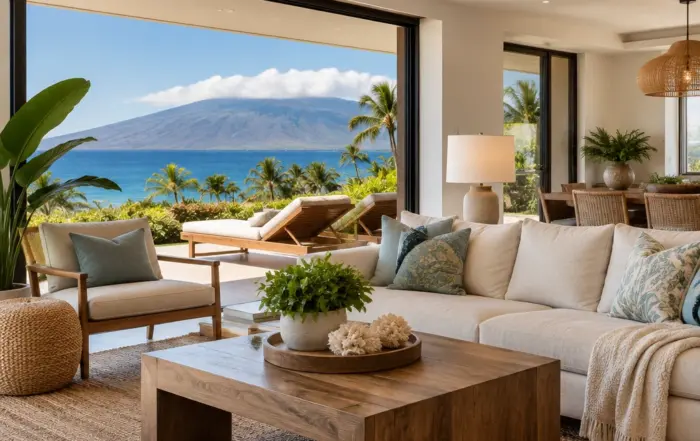
Bill 9 Maui condo furniture decisions are becoming a practical concern for owners whose vacation rentals may need to transition to long-term housing. If your condo is on Maui’s Minatoya list or operates in an apartment-zoned building, the furniture that worked for weekend guests may not be the right setup for a resident, a six-month tenant, or your own personal use.
Maui County’s current phase-out schedule prohibits transient vacation rental use in apartment districts beginning January 1, 2029, in West Maui, and January 1, 2031, in other areas of the county, subject to the ordinance, property status and any future changes. The County describes Bill 9 as applying specifically to apartment-zoned properties operating as short-term rentals, not as a blanket ban on every vacation rental in Maui. Owners should confirm their property’s zoning and current legal status directly with Maui County before making financial or furnishing decisions.
This guide explains how to rethink a Maui condo for long-term rental, personal use or sale; what to remove from a vacation-rental setup; and how to choose durable furniture suited to Maui’s heat, UV exposure, salt air and humidity.
Byline: Valorie Spence, ASID, owner of IDS Maui, designing Hawaii homes since 1999.
What does Bill 9 mean for Maui condo furniture and Minatoya list condo furnishing?
Bill 9 changes the planning horizon for many owners, but it does not automatically dictate what furniture must be placed inside a condo. The first step is to separate the legal question from the design question.
The legal question is whether your unit is affected by the County’s rules. Bill 9, enacted as Ordinance 5909 according to current County materials, addresses transient vacation rental use in apartment districts. The County’s Bill 9 overview explains the relationship between apartment zoning, the earlier Ordinance 1797 and long-term residential occupancy, which the County defines as a continuous period of six months or more per year.
The design question is what the condo needs to become next. Owners generally fall into one of three categories:
- Long-term rental: Furnish for a resident who needs comfortable storage, a proper work area, durable dining furniture and a home-like living room.
- Personal use: Replace hospitality-oriented pieces with furniture that reflects the owner’s routines, collections, hobbies and preferred level of comfort.
- Sale: Create a polished, broadly appealing interior that photographs well without looking like a temporary vacation rental.
A Minatoya list condo furnishing plan should also account for the building’s location. West Maui and South Maui receive intense sun and salt exposure, while Upcountry and North Shore properties face different combinations of dampness, wind and mildew risk. A furnishing plan for a Kaanapali condo may use different fabrics and finishes from one in Makawao, Kula or Haiku.
Do not assume that every Kaanapali or Wailea property is treated the same way. Hotel- and resort-zoned properties are distinct from apartment-zoned properties, and the County’s zoning map, permits, condominium documents and current ordinances should all be reviewed. Rules can change, so this article is not legal advice.
How should a Maui vacation rental be converted to a long-term rental?
A vacation rental is usually designed for quick turnover, visual impact and flexible occupancy. A long-term rental must work every day. That means the furniture should support cooking, working, relaxing, entertaining, storing belongings and maintaining the home between professional cleanings.
Which vacation-rental pieces should stay?
Some hospitality furniture can transition successfully. A well-built sofa, solid dining table, quality bed frames, blackout window treatments and durable outdoor furniture may be worth keeping. However, examine every piece for wear, stains, loose joints, peeling finishes and damage caused by frequent guest use.
Sleeper sofas are useful when an owner wants occasional guest capacity, but they are not always the best choice for a long-term tenant. A full-time resident may value a deeper, more comfortable sofa, a reading chair and a side table with charging access more than an extra sleeping surface.
Likewise, a dining table selected for eight short-term guests may not suit a couple who wants a compact work-from-home area. The table could remain, but the room may need task lighting, supportive chairs and concealed cable management.
What does a long-term Maui rental need?
Start with the daily-use basics:
- A comfortable sofa and occasional seating with performance upholstery.
- Nightstands with adequate storage and accessible outlets.
- Dressers or built-in storage instead of relying only on closets.
- A dining table and chairs designed for regular meals, not occasional staging.
- A practical desk or flexible work surface where the floor plan allows.
- Window coverings that control glare, heat and privacy.
- Durable lanai furniture rated for the condo’s exposure.
- A clear owner’s closet or locked storage area when the property remains partly furnished.
For long-term rental furniture, avoid excessive fragile accessories, glass-heavy tables and fabrics that require special care. Tenants need a home that is attractive but forgiving. A designer can also help decide what belongs in the unit, what should be stored off-island and what should be removed before a new lease begins.
What furniture holds up to Maui’s salt air, humidity and intense UV?
Maui condo furniture must be selected for its microclimate, not just its appearance in a showroom. South Maui locations such as Kihei, Wailea and Makena are hot and bright, with strong UV exposure and salt air. West Maui properties including Kaanapali, Kapalua, Napili and Lahaina face similar coastal conditions. Upcountry homes in Makawao, Kula, Pukalani and Haiku are cooler and damper, increasing the importance of ventilation and mildew-resistant materials.
Which upholstery and case goods are practical?
Performance fabrics are often the most sensible choice for a Maui long-term rental or a heavily used personal residence. Look for upholstery that resists staining, fading and moisture while still feeling comfortable. Indoor/outdoor fabrics can work well in sunny living rooms and lanais, but they should not automatically be used everywhere; bedrooms and quieter spaces may benefit from softer, breathable textiles.
For case goods, favor sealed wood, high-quality laminates, powder-coated metal and finishes designed to tolerate humidity. Inspect hardware carefully. Corrosion-resistant pulls and hinges matter near the ocean, especially in kitchens, bathrooms and lanais. Outdoor furniture should be rated for exterior exposure, and cushions should be stored or protected during extended owner absences.
Leather can be attractive and durable, but direct sun and heat can dry, fade or damage it over time. If leather is used, position it away from intense afternoon sunlight and follow the manufacturer’s care instructions. Rattan and woven materials can add a natural Hawaii feeling, yet natural fibers may be vulnerable to humidity and mildew. Synthetic outdoor wicker is often easier to maintain on a coastal lanai.
What should owners avoid?
Be cautious with untreated natural wood, delicate woven rugs, unsealed stone tables and fabrics that cannot be cleaned on-site. Jute and sisal rugs can be problematic in humid rooms if moisture becomes trapped beneath them. Wool may be a better bedroom option when the room is dry and well ventilated, while performance or indoor/outdoor rugs are often more practical in high-traffic areas and on lanais.
Good design is not the same as using the hardest possible materials. The goal is to match the material to the room, exposure and maintenance plan so the condo remains comfortable and attractive for years.
Can I furnish my Maui condo from the mainland?
Yes. Many Maui owners live off-island for most of the year, and a coordinated design process can make furnishing a condo from the mainland manageable. IDS Maui works remotely with room-by-room composition sheets and 3D renderings that owners can review and approve by email. Purchasing, receiving, freight claims and installation can be coordinated while the owner is away, with the home prepared for arrival.
The critical issue is timing. Furniture production and freight commonly require 8 to 12 weeks, and that does not include every possible delay involving vendor production, consolidation, port schedules, damage claims or condo delivery rules. Owners who want a home ready for a holiday visit or January arrival should typically place orders by August.
How much is freight to Hawaii?
There is no reliable single freight price for every Maui condo. Cost depends on the shipment’s volume, origin, furniture construction, packaging, delivery access, elevator reservations, insurance, installation and whether pieces travel together or separately. A small number of replacement items may be uneconomical to ship, while a coordinated furnishing package can make consolidation more efficient.
Ask for a complete landed-cost estimate that separates product, freight, receiving, storage, delivery, installation and any anticipated claims. This is especially important when comparing mainland furniture with pieces sourced through a professional trade program. The least expensive item is not always the least expensive choice after freight and installation.
For remote owners, the project should also include a site check. Confirm elevator dimensions, loading zones, building delivery windows, lanai access and the condo association’s rules before ordering oversized sofas, beds or dining tables.
How do I choose between long-term rental furniture, personal use and selling?
Before buying anything, write down the condo’s likely use for the next three to five years. Bill 9 creates a reason to plan ahead, but the best furnishing strategy still depends on the owner’s financial and lifestyle goals.
If the condo will become a long-term rental, prioritize durability, easy replacement and tenant comfort. Keep the palette calm and cohesive, provide meaningful storage and limit valuable artwork or heirlooms. A five-year soft-goods refresh plan can help budget for upholstery, rugs, window coverings and mattresses rather than waiting until everything looks tired.
If the condo will become a personal retreat, design around the owner’s arrival pattern. Off-island owners should address humidity, mildew, termites, salt exposure and hurricane-season lanai storage before leaving the property vacant. Smart choices may include breathable covers, moisture monitoring, elevated furniture, secured outdoor pieces and a local contact who can identify leaks or ventilation problems early.
If the property may be sold, avoid over-customizing the furniture. A coordinated living room, appropriately scaled artwork, uncluttered bedrooms and a comfortable lanai can help buyers understand the condo’s potential. However, staging should not hide maintenance issues or imply that furniture is included when it is not.
For owners considering a West Maui vacation rental conversion, the goal is not simply to remove tropical prints and add a desk. It is to create a complete residential environment that functions for a tenant, protects the investment and reflects Maui’s climate.
Conclusion: Plan your Bill 9 Maui condo furniture before the deadline
Bill 9 makes it sensible for affected owners to review their condo’s zoning, operating status and furnishing plan well before a deadline arrives. Start by confirming the property’s status with Maui County, then decide whether the next chapter is long-term rental, personal use or sale. From there, evaluate every major piece for comfort, durability, storage and resistance to Maui’s specific climate.
IDS Maui can help owners furnishing a Maui condo from the mainland with selections, composition sheets, 3D renderings, purchasing, receiving, freight coordination and installation. Whether you need Kaanapali condo furniture, a West Maui vacation rental conversion or a more residential plan for a Minatoya list property, early planning makes the transition more orderly.
FAQ
Does Bill 9 affect every Maui vacation rental?
Bill 9 specifically addresses transient vacation rental use in apartment-zoned properties. Confirm your property’s zoning, permit and current status with Maui County; rules and implementation details can change.
How long does it take to furnish a Maui condo?
Allow approximately 8 to 12 weeks for production and freight, with additional time for receiving, delivery, installation or claims. Orders placed by August are typically better positioned for a holiday or January arrival.
Can IDS Maui manage the project while I am on the mainland?
Yes. IDS Maui supports remote approvals by email, coordinates purchasing and logistics, works with property managers and can prepare the home while the owner is away. Call 808-891-8800 or email IDS Maui to discuss your condo furnishing plan.

Meet Valorie, founder of IDS Maui, who has spent 23 years bringing colorful fabrics, clever space planning, and new technology into homes and workplaces across the Hawaiian Islands, so your project will embody the Hawaiian style.
Need Design Help With Your Maui Home?
Ask us anything — furniture, design, or where to start.