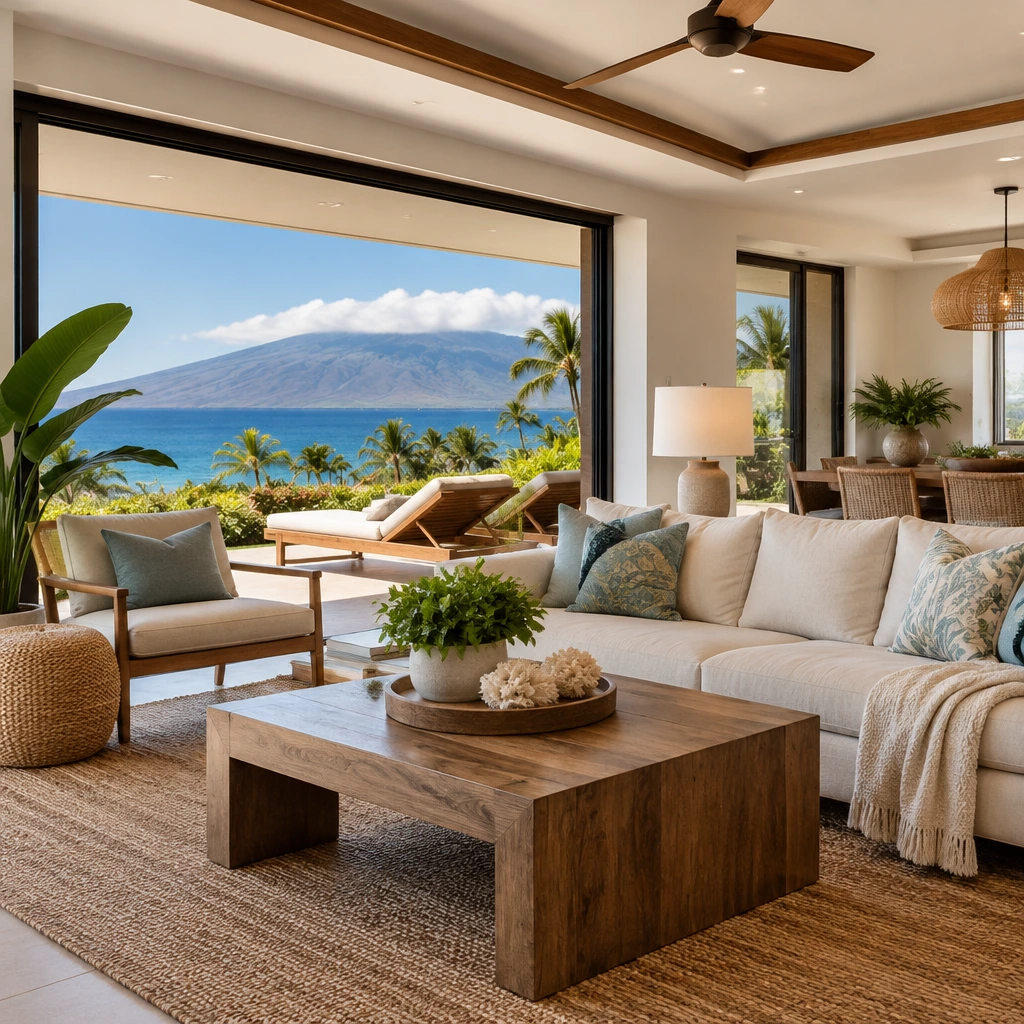
Maui home resale value is influenced by far more than square footage, ocean views, or a recent kitchen renovation. The furniture buyers see—and the condition it is in—can make a home feel either carefully maintained and immediately livable or tired, impractical, and expensive to update. On Maui, smart furniture choices also need to withstand intense UV, salt air, humidity, wind, mildew risk, and long periods when an owner may be off-island.
This guide explains how to select furniture for resale without creating a generic or impersonal home. You will learn which materials and layouts support Maui real estate value, how South Maui differs from Upcountry, what remote owners should plan for, and why durable, flexible furnishings can protect both daily enjoyment and future marketability.
Byline: Valorie Spence, ASID, owner of IDS Maui, designing Hawaii homes since 1999.
How Does Smart Furniture Improve Maui Home Resale Value?
The strongest approach is to furnish for the next buyer without sacrificing the way you live today. That means choosing attractive, adaptable pieces with durable finishes rather than buying furniture that is highly trendy, difficult to move, or suited only to one very specific use.
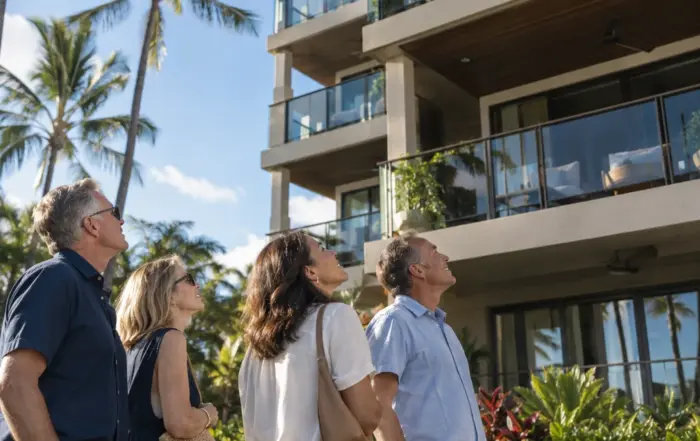
Maui’s market includes everything from compact Kihei condos to resort residences in Wailea and Kaanapali, Upcountry homes in Kula and Makawao, and larger properties in Kapalua. Each property attracts a different buyer. Still, most buyers respond well to a home that feels cohesive, comfortable, easy to maintain, and ready for immediate occupancy.
Recent market data reinforces why presentation matters. The 2025 year-end Maui statistics published through the Realtors Association of Maui reported 699 sales, down from 852 in 2024, while the overall median sales price was $692,860. The report also showed significant differences by area: the 2025 median was $2.3 million in Wailea/Makena, $1.225 million in Kaanapali, $1.6025 million in Kapalua, and $655,000 in Kihei. See the 2025 Maui real estate report for the area-by-area figures.
In a market where buyers compare condition, convenience, and total ownership costs closely, smart furniture can help a property stand apart. It cannot replace sound construction or good maintenance, but it can make the home feel more valuable during photographs, showings, inspections, and the buyer’s first walk-through.
What furniture characteristics appeal to future buyers?
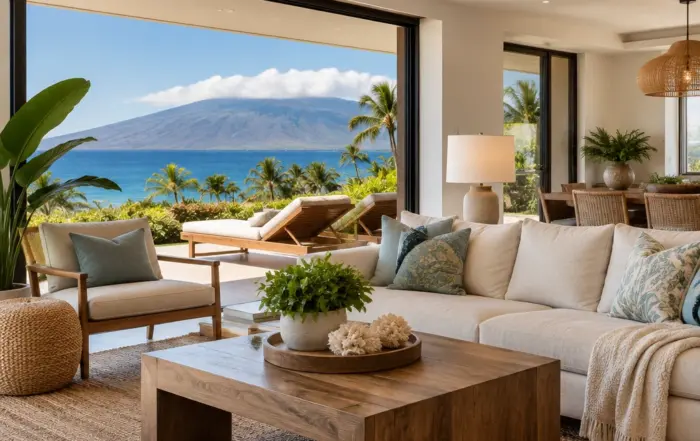
- Neutral but not bland: Natural woods, textured upholstery, soft greens, sand tones, and ocean-inspired colors generally work across many design preferences.
- Flexible scale: A sofa that fits a living room, guest suite, or future rental arrangement is more useful than an oversized piece designed for one floor plan.
- Durable performance: Performance fabrics, sealed wood, powder-coated metal, and quality indoor-outdoor materials reduce visible wear.
- Useful storage: Consoles, benches, nightstands, and built-ins help owners manage beach gear, linens, luggage, and maintenance supplies.
- Clear circulation: Buyers should be able to move easily between the kitchen, living area, lanai, and bedrooms.
Which Island Climate Furniture Works Best in Maui Neighborhoods?
There is no single “Hawaii furniture” solution because Maui has several distinct microclimates. A furniture plan that performs well in sunny Wailea may need different materials from one designed for damp Upcountry or windward Paia.
What works in Wailea, Makena, Kihei, Kaanapali, and Lahaina?
South Maui and West Maui typically bring strong sun, intense UV, salt air, and warm conditions. Upholstery should be selected for colorfastness and cleanability, especially in rooms with large windows or sliding doors opening to a lanai. Natural fibers can be beautiful indoors, but they may need more careful placement and maintenance near open exterior areas.
For outdoor furniture, look for powder-coated aluminum, properly finished teak, marine-grade hardware, and cushions made for exterior exposure. Choose removable covers when possible. A lanai should feel like an extension of the home, but it should also be easy to secure or store before storms and during long periods of vacancy.
What changes in Kula, Makawao, Pukalani, Haiku, Paia, and Hana?
Upcountry homes are cooler and damper, so furniture plans should account for mildew, fireplaces, heavier textiles, and warmer palettes. Upholstery that breathes and can be professionally cleaned is preferable to delicate fabrics that retain moisture. Rugs require special care: wool can work well in bedrooms, while jute and sisal may be vulnerable to mildew in humid homes.
North Shore and Hana properties experience more windward humidity and can be especially rust-prone. Metal hardware should be corrosion-resistant, and furniture should not be pushed directly against damp exterior walls. Leave room for airflow and specify finishes appropriate to the setting.
For outdoor lighting, furniture placement should also coordinate with local requirements. Maui County rules address outdoor lighting, including shielding intended to direct light downward. The County’s outdoor lighting information explains the fully shielded standard. Although lighting is not furniture, a coordinated plan helps the lanai feel finished while supporting responsible design.
Is Investing in Furniture for Resale Better Than Choosing the Cheapest Options?
Usually, yes—but “investing” does not mean buying the most expensive item in every room. It means spending strategically on the pieces buyers notice, touch, and rely on most.
A low-cost sofa that loses its shape, fades quickly, or absorbs humidity may cost more over time when it must be replaced before listing. Likewise, a cheap dining table with a damaged finish can make an otherwise well-maintained home appear neglected. Durable furniture may have a higher initial price, but its useful life, appearance, and resale flexibility can make it the better value.
Where should a Maui homeowner spend first?
- Living room seating: Choose a well-scaled sofa and comfortable chairs with performance upholstery. Seating is often the visual anchor of the home.
- Primary bedroom: Use a quality bed, cohesive nightstands, and lighting that make the room feel calm and complete.
- Dining area: Select a table that fits the room without blocking circulation. Durable finishes are particularly important in vacation and family homes.
- Lanai furnishings: Outdoor seating and dining pieces should look intentional, not like temporary patio additions.
- Entry and storage: A useful console, bench, or closed cabinet creates a strong first impression and supports everyday organization.
Leather can be suitable in Hawaii when it is high quality, properly finished, and protected from direct sun. However, it is not automatically maintenance-free. Rattan can also work beautifully, particularly in breezy interiors, but buyers should distinguish well-made, appropriately finished pieces from fragile decorative versions intended for occasional use.
Smart resale planning also avoids over-customization. A dramatic color or unusual silhouette can be effective as an accent, but large-ticket items should generally remain compatible with multiple decorating styles. The goal is a home that feels distinctive because of its craftsmanship and connection to Maui—not because every piece depends on a passing trend.
How Long Does It Take to Furnish a Maui Home From the Mainland?
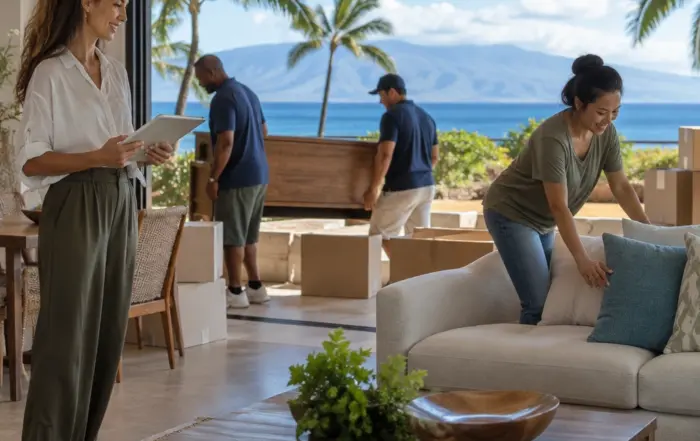
For a complete furnishing project, plan earlier than you would on the mainland. Production, consolidation, ocean freight, receiving, freight claims, delivery, and installation all add time. IDS Maui generally plans around 8–12 weeks for production plus freight, depending on the selections and vendors involved. Orders placed by August are typically the safest timing for a holiday visit or January arrival.
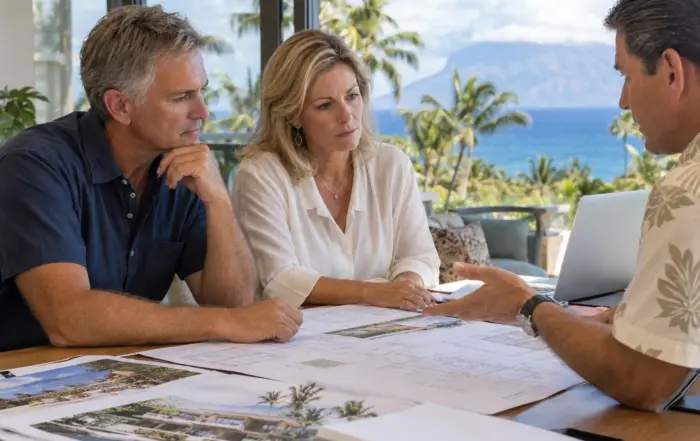
That schedule is especially important for off-island owners. A home may be vacant for much of the year, yet still need to be comfortable and operational when the owner arrives. Remote design work can include room-by-room composition sheets, 3D renderings, email approvals, purchasing, receiving, installation, and coordination with a property manager.
How much is freight to Hawaii?
There is no responsible single freight price for every Maui home. Cost depends on the origin, shipment volume, consolidation method, crate dimensions, delivery location, access conditions, and whether pieces require special handling. A sofa, a container of furnishings, and a small quick-ship order will all be priced differently.
The practical way to control freight is to finalize selections together, combine orders when possible, confirm dimensions before purchase, and account for receiving and installation—not just the vendor’s item price. A lower mainland price may not remain lower after shipping, storage, damage risk, and labor are added.
What is quick ship, and can it protect resale value?
Quick ship refers to furniture available on a shorter production schedule than fully made-to-order pieces. It can help when a condo must be prepared for an upcoming arrival, a rental needs a refresh, or a listing date has moved forward. However, quick ship should still meet the project’s requirements for scale, climate performance, warranty, and replacement availability.
For a new build or remodel, bring the designer in before electrical and drywall decisions are finalized. Furniture dimensions affect outlets, lighting, built-ins, plumbing selections, appliance clearances, and the relationship between indoor rooms and the lanai. Early coordination with the architect and contractor reduces expensive compromises later.
Can Smart Furniture Support a Maui Rental, Sale, or Personal Home?
Furniture strategy should follow the property’s likely future use. A personal home may prioritize heirloom pieces and deep comfort. A long-term rental needs durability, storage, and easy maintenance. A resort-oriented property may require a hospitality-minded plan with contract-grade materials, performance fabrics, sleeper sofas where appropriate, durable case goods, and an owner’s closet.
Regulatory conditions also make flexibility important. Maui County’s Bill 9 addresses short-term rental use in apartment-zoned condos, including Minatoya-listed units. When the County announced the law, it reported that 6,208 Minatoya-listed units were actively operating as short-term rentals as of May 29, 2024. Read the Maui County Bill 9 announcement for the County’s description of the measure.
The transition schedule and property-specific rules matter. The brief for this article identifies 2029 for West Maui and 2031 elsewhere for affected units, while hotel- and resort-zoned properties in areas such as Kaanapali and Wailea are treated differently. Rules can change, and owners should confirm the current status of a property directly with Maui County rather than relying on a furnishing article for legal advice.
Because use may change, avoid a design that works only as a short-term rental. Select pieces that can transition to personal use, long-term occupancy, or sale. A sleeper sofa, durable dining table, closed storage, and comfortable task lighting can serve several scenarios. A well-designed owner’s closet can preserve personal belongings without making the rest of the home feel temporary.
For remote owners, preparation before leaving is equally important. Review humidity control, mildew prevention, salt exposure, termite concerns, hurricane-season lanai storage, and property-manager access. These steps protect the furniture investment and help preserve the condition that contributes to Maui home resale value.
Conclusion: Design for Maui Living and the Next Owner
The best furniture plan for Maui balances beauty, durability, comfort, and flexibility. Start with the property’s microclimate, then consider how the home may be used over the next five to ten years. Choose performance materials where exposure is highest, invest in the seating and storage buyers notice, and keep the overall composition adaptable.
IDS Maui helps homeowners make those decisions remotely or in person, from the Upcountry showroom in Makawao. The process can include furniture selection, 3D renderings, purchasing, freight coordination, installation, and communication with contractors or property managers. Whether the goal is a personal retreat, a refreshed resort residence, or a future sale, thoughtful furniture makes the home easier to enjoy and easier to present.
Frequently Asked Questions
How much does an interior designer cost on Maui?
There is no universal flat rate because fees depend on project scope, rooms, furnishings, procurement, freight, installation, and construction coordination. IDS Maui prepares a project-specific proposal rather than applying one number to every home.
How long does it take to furnish a Maui home?
Allow approximately 8–12 weeks for production plus freight for many complete furnishing projects. Custom items, remote locations, freight availability, and installation requirements can extend the schedule.
Can I furnish my Maui condo from the mainland?
Yes. Remote furnishing can be managed through email approvals, room-by-room composition sheets, 3D renderings, purchasing, receiving, freight coordination, installation, and property-manager communication. Call 808-891-8800 or email IDS Maui to discuss your property and timeline.

Meet Valorie, founder of IDS Maui, who has spent 23 years bringing colorful fabrics, clever space planning, and new technology into homes and workplaces across the Hawaiian Islands, so your project will embody the Hawaiian style.
Need Design Help With Your Maui Home?
Ask us anything — furniture, design, or where to start.