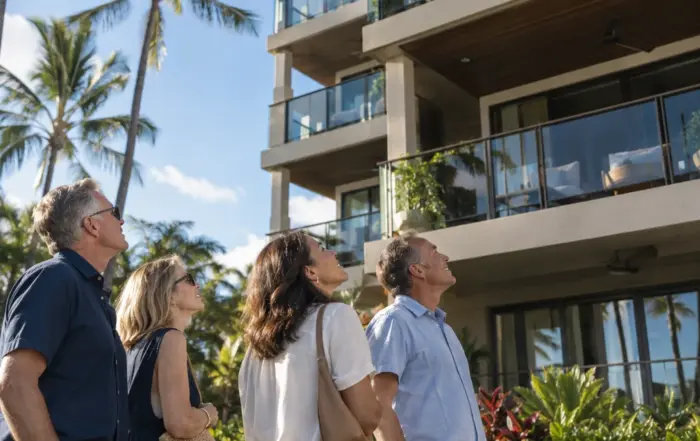
Designing Lahaina interiors now means doing more than selecting finishes, furniture, and art. It means helping rebuilt homes feel connected to a town finding its way back to daily life. With Lahaina’s Front Street reopened to vehicle traffic on August 1, 2026, and commercial activity returning through businesses including ʻUlu o Lele Marketplace and Kimo’s, the relationship between private homes and the town’s public heart is becoming important again. Maui County’s Front Street reopening announcement describes the infrastructure work behind that milestone, from seawall and sidewalk repairs to new railings, trees, fencing, paving, and striping.
For homeowners rebuilding in Lahaina, the goal is not to recreate a lost past as a stage set. A thoughtful home can acknowledge history, support contemporary family life, withstand West Maui’s intense sun and salt air, and remain respectful of a community still recovering. This guide explains how to approach rebuilt Lahaina interiors, choose durable materials, incorporate cultural references with care, and create a home that feels meaningfully connected to reopened Front Street.
How Does Designing Lahaina Interiors Connect a Rebuilt Home to Front Street?
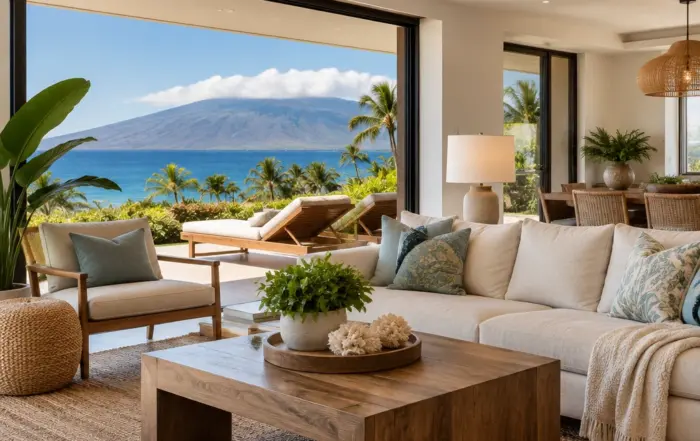
The strongest connection begins with a sense of place rather than a theme. Lahaina homes should feel rooted in West Maui through proportion, airflow, texture, color, and materials—not through an overuse of obvious “tropical” décor. A home can reference the town’s waterfront setting with natural fibers, shaded outdoor rooms, hand-finished wood, and artwork by Maui-based makers while still feeling collected and personal.
Front Street’s reopening is an important civic milestone, but it does not mean every part of Lahaina has returned to its pre-fire condition. The LahainaTown Action Committee notes that some businesses have reopened or relocated while others remain in the planning stages of rebuilding. That evolving reality calls for interiors that are welcoming without being performative. A rebuilt home should support residents first: comfortable gathering spaces, flexible guest rooms, storage for daily equipment, and outdoor areas designed for real family use.
Think in layers, not souvenirs
A meaningful Lahaina home may include historic photographs, locally made ceramics, lauhala details, artwork connected to the ocean or ʻāina, or a material palette inspired by old plantation and waterfront architecture. However, cultural interior design in Maui should be approached through research, relationships, and context. Designers should avoid using sacred imagery, motifs, or cultural objects simply because they appear visually attractive.
Instead, build a layered composition:
- Architecture: generous openings, shaded lanais, ceiling fans, and layouts that encourage indoor-outdoor living.
- Materials: durable woods, woven textures, performance upholstery, stone, and metals selected for Maui’s climate.
- Story: family photographs, heirlooms, commissioned work, and objects with a genuine connection to the homeowner or place.
- Restraint: enough visual quiet for the history of Lahaina to remain present without turning the home into a museum.
What Should Rebuilt Lahaina Interiors Borrow From Lahaina’s History?
Historical sensitivity does not require a home to look old-fashioned. It means understanding what should be preserved, what can be reinterpreted, and where contemporary living demands change. Lahaina’s historic district and waterfront environment have always included adaptation. Rebuilding therefore offers an opportunity to combine familiar visual cues with safer, more resilient construction and updated living patterns.
For example, a new interior might use the rhythm of traditional wood windows as inspiration for custom cabinetry fronts, or echo the vertical proportions of historic buildings through tall bookcases and interior doors. A muted palette of warm white, weathered wood, soft charcoal, and ocean blue can reference Lahaina’s land and sea without becoming overly literal.
Use historic references with a modern function
In a rebuilt home, an antique-style console can conceal modern charging stations. A built-in window seat can provide storage for linens. A dining table can be sized for extended family gatherings rather than occasional entertaining. These decisions connect the interior to the way many Maui households actually live: communally, flexibly, and across generations.
The same principle applies to guest rooms and ohana spaces. A room may function as a quiet office during the week, a bedroom for visiting family during holidays, and a comfortable refuge during a longer stay. Durable sleeper sofas, movable tables, and concealed storage allow the home to change without looking temporary.
Designers working near the Lahaina National Historic Landmark District must also recognize that exterior character, archaeological review, flood requirements, and cultural resources can influence the rebuilding process. Reporting on a Lahaina home reconstruction described changes including raising a house by four inches to meet new county flood requirements, adding a second story, and undergoing cultural and coastal review. Maui Now’s coverage of rebuilding in Lahaina’s historic district illustrates why interior planning should begin alongside the architect, builder, and permitting team—not after construction is nearly complete.
Which Materials Hold Up in a Lahaina Home Near the Water?
West Maui interiors must balance beauty with performance. Lahaina receives intense sunlight, salt-laden air, wind, heat, and occasional humidity. Materials that look excellent in a showroom may fade, corrode, mildew, or deteriorate quickly if they are not selected for the environment.
Choose performance where daily life is hardest
For upholstered seating, specify solution-dyed performance fabrics or other textiles rated for heavy use. These are especially valuable in great rooms, media rooms, and homes with children, pets, or frequent visitors. Leather can work well indoors when the room is protected from direct sun and the finish is appropriate, but it should not automatically be treated as maintenance-free. Rattan and woven furniture can also be successful when used in ventilated spaces and kept away from persistent moisture.
For floors and rugs, consider the room’s exposure before choosing a material:
- Great rooms: performance rugs sized to anchor the seating arrangement, rather than small mats that visually separate each piece.
- Bedrooms: wool rugs can add softness and insulation while remaining more appropriate indoors than moisture-sensitive natural fibers.
- Lanais: indoor/outdoor rugs and fabrics designed for UV exposure, with furniture that can be cleaned easily.
- Humid or poorly ventilated areas: use caution with jute and sisal, which can develop mildew when moisture remains trapped.
Metals deserve equal attention. Standard indoor hardware may corrode quickly near the coast, while exterior lighting, door hardware, and lanai fixtures should be selected with marine exposure in mind. A layered lighting plan can combine ceiling fixtures, sconces, lamps, and indirect light so a home remains comfortable at different times of day. Shielded, downward-facing exterior lighting is also an important consideration for Maui properties.
Design for maintenance access
Resilient design includes practical details: removable cushion covers, wipeable dining chairs, accessible filters, washable runners, and furniture that can be moved for cleaning. Built-ins should include ventilation where electronics are stored. Outdoor pieces should have a clear plan for storm-season storage, especially when owners spend part of the year away from Maui.
How Can a Designer Coordinate a Lahaina Rebuild From Off-Island?
Many Maui homeowners live on the mainland or elsewhere in Hawaii for much of the year. A remote design process can work well when decisions, approvals, purchasing, and installation are organized from the beginning.
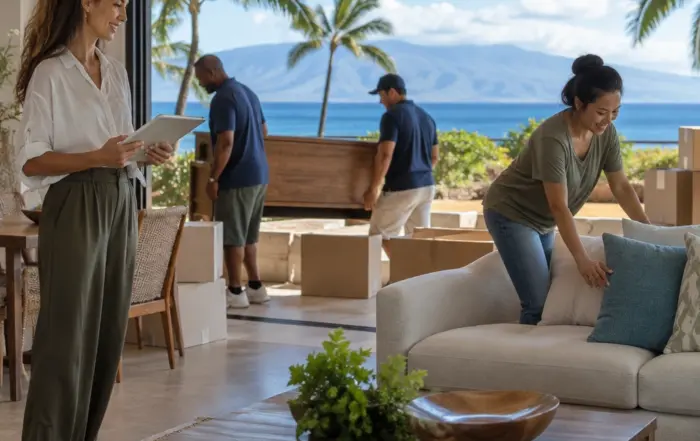
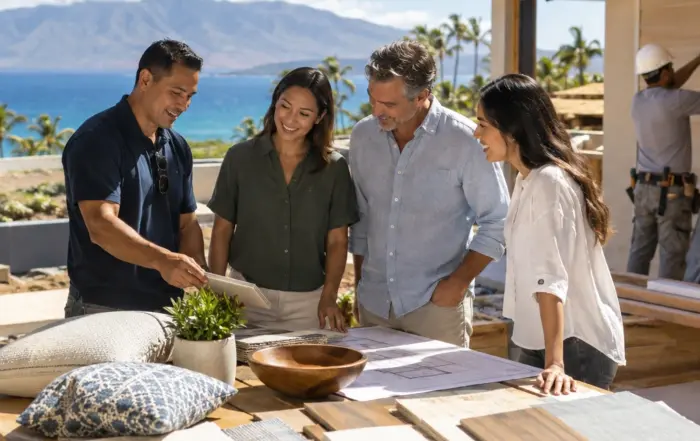
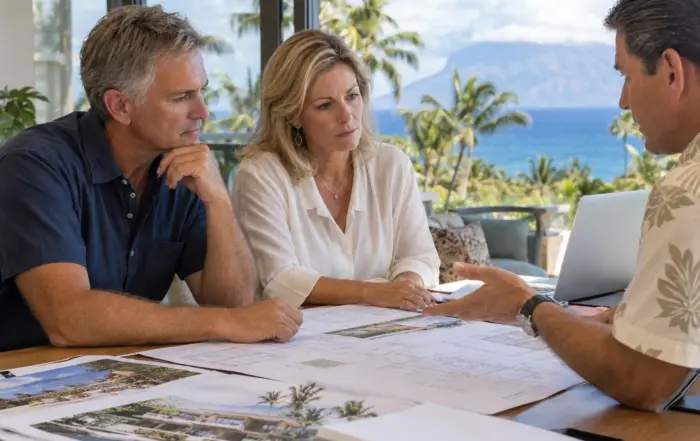
IDS Maui uses room-by-room composition sheets and 3D renderings so clients can review furniture layouts, finishes, lighting, rugs, and artwork by email. The designer can coordinate with the architect, contractor, cabinetmaker, property manager, freight providers, and installation team while the homeowner is away. That level of organization matters in Lahaina, where cabinetry, stone, appliances, and furniture may all arrive on different schedules.
For a furnished home, allow approximately 8 to 12 weeks for production plus freight, depending on the selections and vendors. Homeowners hoping to arrive for the holidays or in January should typically place orders by August. Quick-ship items can shorten the schedule, but “quick ship” does not always mean immediate delivery to Maui; warehouse availability, consolidation, ocean freight, and receiving still need to be considered.
What should be decided before drywall?
In a new build or major remodel, the designer should be involved before electrical and drywall decisions are final. Furniture plans affect outlet locations, sconces, television placement, built-ins, ceiling fans, and lighting control. Plumbing fixtures, appliances, cabinet hardware, stone, and specialty finishes also require lead time.
A coordinated plan can prevent common problems such as a ceiling fan centered incorrectly over the bed, a dining pendant that conflicts with a view, or an otherwise beautiful lanai without enough lighting and weather-protected storage. Because shipping to Hawaii adds time and cost, selections should be finalized months before completion whenever possible.
How Can a Lahaina Home Feel Connected to a Reopened Front Street?
Connection does not mean copying Front Street inside the house. It means designing spaces that participate in the life of Lahaina. A front entry can be welcoming and shaded. A lanai can support morning coffee, family meals, and conversations after a walk through town. A dining area can accommodate neighbors and visiting relatives instead of being reserved for formal occasions.
The relationship can also be visual. Frame views toward palms, mountains, or the ocean without blocking natural breezes. Use window treatments that control glare while preserving daylight. Select art and objects slowly, prioritizing pieces with a personal or local story. When the home is within walking distance of reopened businesses, create practical drop zones for shoes, beach items, bags, and sun hats so the interior supports the rhythm of life outside.
Front Street’s recovery is taking place alongside the restoration of historic and cultural spaces. The Lahaina Restoration Foundation’s master plan includes historic buildings such as the Old Lahaina Courthouse, Baldwin Home, Lahaina Prison, and Master’s Reading Room, with interiors potentially adapting even where exterior appearances are retained. The Lahaina Restoration Foundation’s historic building restoration plan shows how preservation can include both continuity and carefully considered interior change.
That is a useful model for private residences. Preserve what carries meaning. Improve what supports safety and daily life. Add beauty that feels honest to the homeowner, the climate, and Lahaina’s continuing story.
How Can IDS Maui Help Design a Rebuilt Lahaina Home?
Designing a rebuilt home after loss or disruption requires patience, coordination, and sensitivity. IDS Maui brings experience designing Hawaii homes since 1999, with a process that can include space planning, finish selections, furniture, lighting, rugs, art, purchasing, receiving, freight claims, and installation. The goal is a home that feels complete when the owner arrives—not a collection of boxes and unfinished decisions.
Frequently asked questions
Can I furnish my Lahaina home from the mainland?
Yes. Room-by-room plans, 3D renderings, email approvals, purchasing, receiving, freight coordination, and installation can be managed while you are away.
When should I hire an interior designer for a Lahaina rebuild?
Ideally, before electrical, drywall, cabinetry, lighting, and appliance decisions are finalized. Early planning helps align the interior with the architect and builder.
How do I create a culturally respectful Maui interior?
Start with place, family history, local relationships, and appropriate materials. Avoid decorative shortcuts, and work with knowledgeable professionals when cultural or historic resources are involved.
To discuss a rebuilt Lahaina home, a West Maui furnishing project, or a remote design plan, call IDS Maui at 808-891-8800 or email the studio.
Byline: Valorie Spence, ASID, owner of IDS Maui, designing Hawaii homes since 1999.

Meet Valorie, founder of IDS Maui, who has spent 23 years bringing colorful fabrics, clever space planning, and new technology into homes and workplaces across the Hawaiian Islands, so your project will embody the Hawaiian style.
Need Design Help With Your Maui Home?
Ask us anything — furniture, design, or where to start.