Hire an interior designer for a Maui new build before electrical and drywall—ideally while the architect is developing the floor plan. That is when lighting, plumbing, cabinetry, built-ins and furniture layouts can still be coordinated with the structure, rather than adjusted after walls are closed. If you are searching for when to hire an interior designer for a new build, the short answer is: earlier than you think, especially on Maui, where selections and furnishings must also be ordered, shipped and received on an island schedule.
A room-by-room plan helps turn that early start into a manageable sequence. This timeline explains what to decide at each construction stage, which rooms need attention first and how to account for production, freight and Maui’s different microclimates. Whether you live on-island or are planning from the mainland, early coordination gives your builder clear decisions and gives your new home a better chance of being ready when you are.
When to hire an interior designer for a new build on Maui?
Bring a Maui new build interior designer into the project during schematic design or early design development—before the electrical plan is finalized and well before drywall. The designer can review how you will use each room, place furniture on the plans and identify where lighting, outlets, switches, plumbing or built-ins need to support that layout.
Waiting until the home is nearly finished can limit your choices. A reading light may need a new outlet; a vanity may not suit the selected plumbing; or a sofa may block a doorway because its dimensions were not considered earlier. Starting early makes interior design before drywall part of the build process, not a list of late fixes.
A useful planning sequence is:
- Early design: Establish the room plan, priorities, style direction and likely furniture dimensions.
- Before electrical and plumbing rough-ins: Coordinate lighting locations, switching, outlets, plumbing fixtures and appliance requirements.
- Before drywall: Confirm built-ins, cabinetry, interior finishes and any wiring or blocking needed for fixtures.
- During construction: Finalize furnishings, place orders and track production and freight alongside the builder’s schedule.
- Near completion: Confirm receiving, delivery, installation and final room styling.
Construction schedules vary, so use these stages rather than relying on a fixed number of months before move-in. The key is to make decisions before the related work is installed. A designer can work with your architect and builder to identify those decision deadlines and keep the selections moving.
What should be decided before drywall?
Before drywall, focus on choices that affect what is inside or attached to the walls. This is the point to coordinate the lighting plan, plumbing locations, appliance requirements, cabinetry and built-ins. The goal is not to choose every cushion or accessory; it is to ensure the home’s infrastructure supports the way you want each room to function.
Lighting, electrical and plumbing
Plan overhead fixtures, lamps, task lighting and switching together. In a vaulted great room, for example, fixture scale and mounting height matter, while a bedroom may need bedside outlets and reading lights in convenient locations. Include ceiling fans where appropriate, and consider cross-breezes and louvers when planning comfort without relying entirely on air conditioning. Confirm plumbing fixtures and appliance specifications early enough for the builder to coordinate rough-ins.
Cabinetry, storage and material choices
Review kitchen and bathroom cabinet layouts, pantry storage, closet needs and any built-ins before walls close. Also consider which materials suit the home’s location. Hot, sunny South Maui areas such as Kihei, Wailea and Makena, and West Maui areas such as Kaanapali, Kapalua, Napili and Lahaina, experience intense UV and salt air. North Shore and Hana locations are windward, humid and more rust-prone. Upcountry communities such as Makawao, Kula, Pukalani and Haiku are cooler and damp, so mildew resistance and a warmer interior palette may be priorities.
These conditions can influence finish and furnishing decisions as well as construction details. Your designer should help coordinate selections with the architect and builder, so the products and installation requirements are understood before ordering. Changes made after drywall may still be possible, but can mean extra cost, rework or a narrower range of options.
How does a room-by-room Maui home design timeline work?
The exact order depends on the build, but the following sequence helps make the Maui home design timeline practical. Begin with rooms that drive construction decisions or require long-lead selections; then develop the supporting spaces. Many decisions overlap, and furniture planning should start before construction is complete.
Kitchen and dining: early design through cabinet installation
Start with the kitchen because it involves cabinetry, appliances, counters, plumbing and task lighting. Confirm appliance sizes and the cabinet plan early, then coordinate finish selections and dining furniture as the room layout develops. Measure the dining area on the plans so a table and chairs fit comfortably without interrupting circulation. Final dimensions and site conditions should be checked before orders are released.
Great room and lanai: early layout, then furnishings
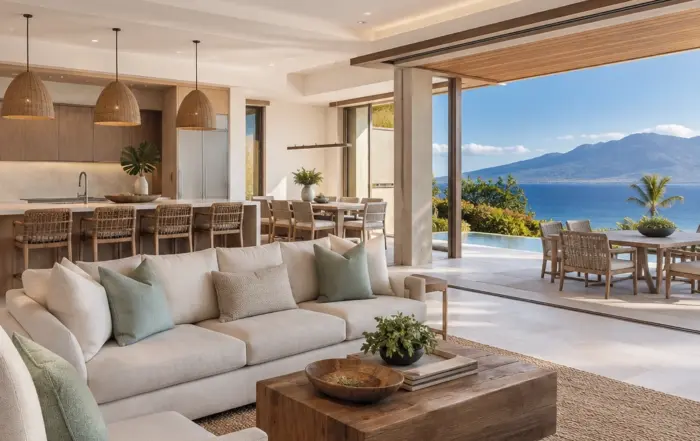
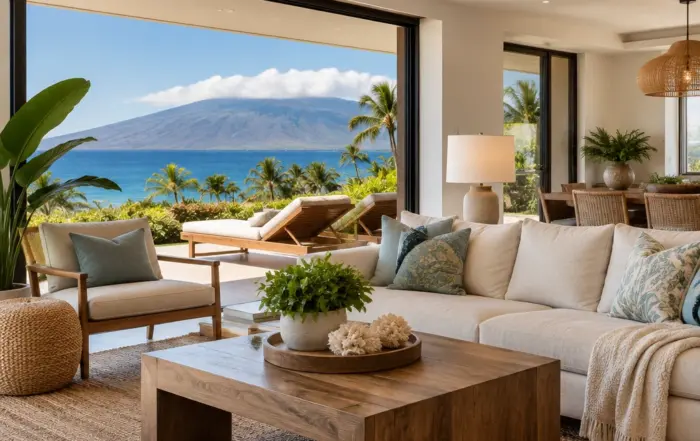
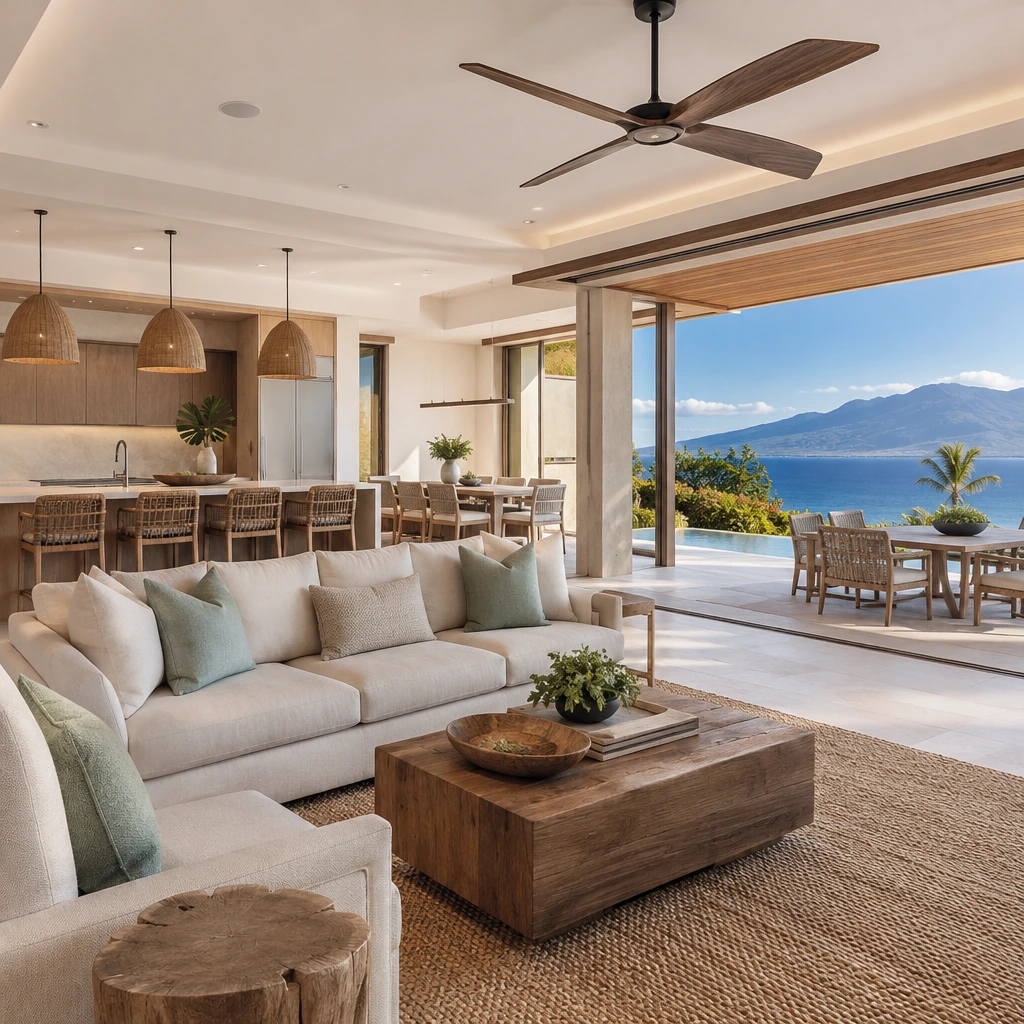
Plan the great room and lanai together, especially in homes designed for indoor-outdoor living. Establish the sofa, chairs, rug and television or focal-point arrangement early enough to inform outlet and lighting locations. For open-plan rooms, choose a rug large enough to anchor the furniture group rather than treating it as a small accent. Consider performance or indoor-outdoor materials for high-traffic and lanai use, and specify suitable outdoor finishes for exposure to sun and salt.
Bedrooms and bathrooms: rough-in coordination, then comfort and storage
In bedrooms, decide bed size, bedside lighting, outlets and closet needs before electrical and drywall. Later, select rugs, window treatments, bedding and case goods to suit the room and its use. Bathrooms need early coordination of plumbing, vanity dimensions, mirrors, lighting and storage. If the home includes an ohana unit, plan its privacy, sleeping arrangements and storage alongside the main home instead of leaving those decisions until the end.
Entry, office and secondary spaces: finish the plan before ordering
Use the construction period to define the needs of entries, offices, laundry rooms and guest spaces. These rooms are easy to postpone, yet a planned desk, entry bench or storage cabinet may affect electrical or built-in requirements. Once dimensions and finishes are confirmed, furnishings can be selected and ordered in line with the anticipated installation date.
How do freight and Maui’s climate affect the schedule?
Furniture, cabinetry and stone often ship to Maui, so selection dates need to account for more than the construction schedule. As a planning rule, allow approximately 8–12 weeks for production plus freight for many furnishings; actual lead times vary by product, vendor and shipping conditions. Custom items can take longer. Confirm current estimates before ordering, and avoid treating a delivery window as a guaranteed arrival date.
For a holiday or January arrival, orders placed by August are typically a sensible target. Earlier planning can provide more flexibility for production, freight delays, receiving and installation. A designer can track orders, coordinate receiving and help manage freight claims if an item arrives damaged. For owners who live off-island, the process can include room-by-room composition sheets and 3D renderings for approval by email, with purchasing and installation coordinated while the owner is away. IDS Maui can also work with a property manager.
Climate matters after installation, too. Salt air and intense UV in leeward areas can be hard on finishes and fabrics; damp Upcountry and windward conditions call for attention to moisture and mildew. Before leaving a home unoccupied, plan for humidity, mildew prevention, termites and safe storage of lanai furnishings during hurricane season. These practical steps help protect the investment between visits.
Do you work with my contractor or architect?
Yes. Interior design works best when it is coordinated with the architect and builder, especially during a new build. Your designer can share plans and specifications, review dimensions, discuss selections and help keep design decisions aligned with construction milestones. IDS Maui works with clients’ project teams and also offers design-build collaboration with partners.
That coordination is especially valuable when selections affect several trades. A cabinet change may influence electrical or plumbing; a light fixture may require a different box or support; and a stone choice can affect fabrication and delivery timing. Keep a shared record of approved selections and deadlines, and make sure the builder has the current version. This reduces confusion and makes it easier to identify decisions that need attention before the next construction stage.
What should you remember when planning a Maui new build?
Start with the floor plan, not the finishing touches. Hire a designer before electrical and drywall, coordinate the rooms that affect construction first, and allow time for selections to be produced and shipped. Then work room by room: kitchen and baths for early technical decisions, great room and lanai for layout and indoor-outdoor function, followed by bedrooms and secondary spaces. The right sequence helps connect the home’s architecture, furnishings and day-to-day use.
Every project has its own construction schedule and shipping variables, so treat this timeline as a framework to adapt with your project team. Valorie Spence, ASID, owner of IDS Maui, has been designing Hawaii homes since 1999. IDS Maui’s showroom is in Makawao, and the team supports both local and off-island owners through planning, purchasing and installation.
Frequently asked questions about hiring a designer for a Maui new build
Can I hire an interior designer after construction has started?
Yes. The earlier you begin, the more construction-related choices can be coordinated before installation. If work is already underway, share the current plans and schedule so the designer can identify upcoming decision deadlines.
How long does it take to furnish a Maui home?
It depends on the number of rooms, product availability and shipping. As a baseline, allow about 8–12 weeks for production plus freight for many furnishings, with additional time for custom pieces, receiving and installation.
Can I approve the design while I’m living off-island?
Yes. Room-by-room composition sheets and 3D renderings can be reviewed and approved by email. Purchasing, receiving and installation can also be coordinated while you are away.
Planning a Maui new build? Call IDS Maui at 808-891-8800 or email the team to discuss your project timeline and next steps.
By Valorie Spence, ASID, owner of IDS Maui, designing Hawaii homes since 1999.

Meet Valorie, founder of IDS Maui, who has spent 23 years bringing colorful fabrics, clever space planning, and new technology into homes and workplaces across the Hawaiian Islands, so your project will embody the Hawaiian style.
Need Design Help With Your Maui Home?
Ask us anything — furniture, design, or where to start.