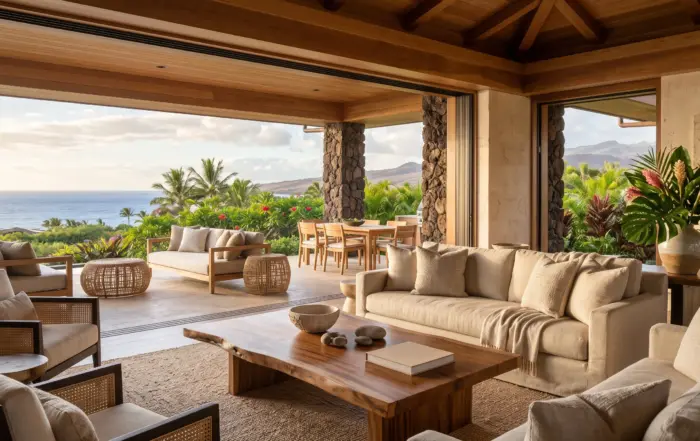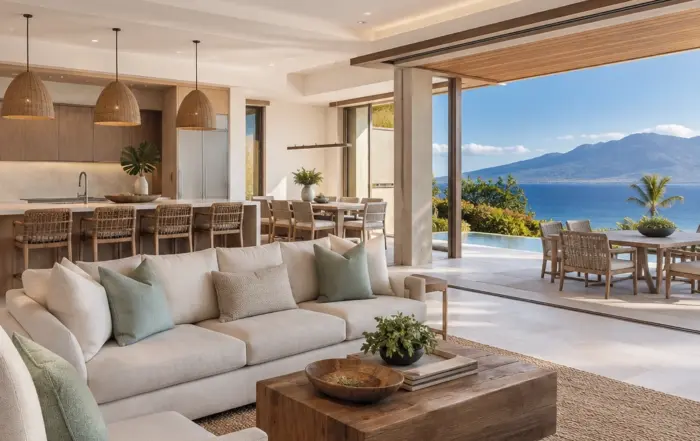
Luxury furniture in Maui is best sourced through a designer-led showroom and procurement process—not by choosing beautiful pieces in isolation. Maui homes face intense ultraviolet light, salt air, humidity, wind, freight delays, and different microclimates from Wailea to Upcountry. The right furniture must therefore combine refined design with material performance, accurate scale, and dependable island delivery.
For homeowners searching for luxury furniture in Maui, IDS Maui provides a practical starting point: visit the Upcountry showroom in Makawao, review coordinated furniture and finish options, and build a complete plan for purchasing, receiving, freight claims, and installation. This guide explains where to shop, what to look for, how Maui’s regions affect your selections, and how to furnish a vacation home or primary residence when you live off-island.
Byline: Valorie Spence, ASID, owner of IDS Maui, designing Hawaii homes since 1999.
Where to Shop for Luxury Furniture in Maui
The best place to shop for luxury furniture in Maui is a showroom or design studio that can coordinate the entire project—not simply sell individual tables, sofas, or beds. A high-quality furniture source should help you compare upholstery, case goods, lighting, rugs, window treatments, outdoor pieces, and accessories as one composition.
IDS Maui’s showroom in Makawao is especially convenient for homeowners who want to see materials and proportions in person while working with a designer familiar with Maui construction, climate, and freight logistics. That Upcountry location also makes it possible to discuss how a home in Kula, Pukalani, Haiku, or Makawao may need different finishes from a beachfront condo in Wailea or Kaanapali.
What to expect from a Maui furniture showroom
When comparing Maui furniture showrooms, ask whether the business can provide:
- Room-by-room furniture plans and scaled layouts
- Performance fabrics and finishes appropriate for Hawaii
- Custom and quick-ship options
- Freight coordination to Maui
- Receiving, inspection, storage, and damage claims
- White-glove delivery and installation
- Remote approvals through email, video calls, and 3D renderings
These services matter because a sofa that looks perfect online may be too large for a condo elevator, too delicate for a sunny lanai, or difficult to replace after shipping damage. A designer also protects the overall composition. Instead of buying a dining table first and trying to make the rest of the room work later, you can establish the scale, circulation, color palette, and material strategy before placing orders.
How Does Maui’s Climate Affect High-End Home Decor?
High-end home decor in Maui must be selected for the island’s specific conditions. South Maui communities such as Wailea, Makena, and Kihei are hot and bright, with intense UV exposure and salt air near the coast. West Maui locations including Kaanapali, Kapalua, Napili, and Lahaina face similar coastal demands. By contrast, Upcountry homes can be cooler and damper, while North Shore and Hana properties are windward, humid, and more vulnerable to rust.
Materials that perform well
For coastal rooms, look for solution-dyed performance fabrics, powder-coated or marine-grade metals, sealed hardwoods, treated outdoor materials, and finishes designed to resist fading and corrosion. Leather can work well indoors when the room is climate-controlled and the hide is properly selected, but direct sun, sunscreen, sand, and open-air exposure can accelerate wear.
Rattan and woven furniture can bring a natural island feel, yet not every woven material is suitable for every Maui room. Use carefully finished pieces indoors or in protected areas, and confirm whether the product is rated for outdoor use. For lanai furniture, choose products specifically manufactured for exterior conditions rather than assuming that any “natural” material will tolerate rain, humidity, and UV.
Preventing mildew and moisture problems
Humidity is not only a comfort issue. Moisture can contribute to mold growth when surface relative humidity remains high. The U.S. Department of Energy’s guide to mold, moisture, and the home explains that controlling water and moisture sources is central to protecting building materials and furnishings.
In practical terms, that means allowing air circulation behind large case goods, avoiding untreated natural-fiber rugs in damp rooms, using washable or performance textiles where appropriate, and maintaining ventilation in closets and guest rooms. Jute and sisal can be attractive, but they may be poor choices for especially humid areas unless the room is consistently dry and well ventilated. In bedrooms, wool rugs can provide softness and durability, while indoor-outdoor rugs are often better for high-traffic areas and lanais.
Which Maui Neighborhoods Need Different Furniture Plans?
Furnishing Maui homes successfully requires more than a generic tropical style. The location of the property should influence materials, colors, airflow, and the balance between indoor and outdoor living.
South and West Maui
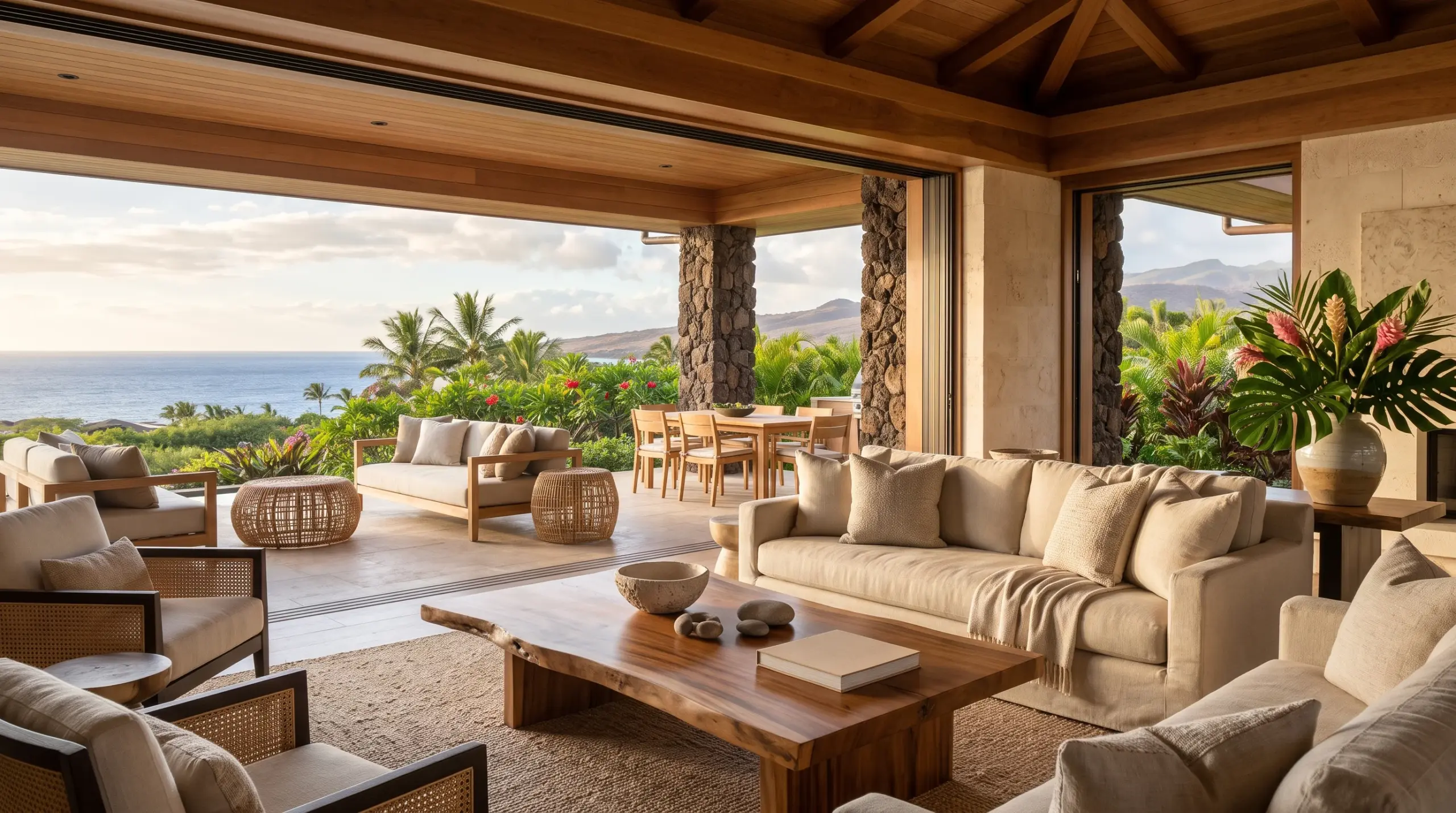
Wailea, Makena, Kihei, Kaanapali, Kapalua, and Napili homes often benefit from a palette that feels light and relaxed without relying on fragile materials. Textured performance upholstery, sealed wood, stone-top tables, woven accents, and fade-resistant window treatments can create a refined resort atmosphere while handling frequent use.
For condos, scale is critical. Choose streamlined arms, apartment-sized sofas, nesting tables, and dining chairs that preserve circulation. If the home is rented, prioritize replaceable upholstery, durable finishes, and case goods that will not show every mark from luggage, sand, or sunscreen.
Upcountry Maui
Makawao, Kula, Pukalani, and Haiku call for a different approach. Cooler temperatures, damp conditions, fireplaces, and lush surroundings often support warmer palettes, layered lighting, wool rugs, substantial wood furniture, and comfortable upholstery. However, dampness still requires thoughtful ventilation and moisture-aware material selection.
An Upcountry home does not need to look overly rustic. High-end designer furniture Maui clients choose may include tailored upholstery, sculptural lighting, natural stone, and contemporary wood tones. The goal is to connect the interior to the landscape while maintaining a polished, livable feel.
North Shore and Hana
Paia, Spreckelsville, and Hana properties experience windward conditions and higher humidity. Rust-resistant hardware, protected outdoor furniture, easy-clean fabrics, and carefully sealed surfaces are especially important. Outdoor pieces should be stored or covered during severe weather, and owners should include a maintenance plan for metal finishes, cushions, and woven materials.
How Does the Furniture-Buying Process Work for Off-Island Owners?
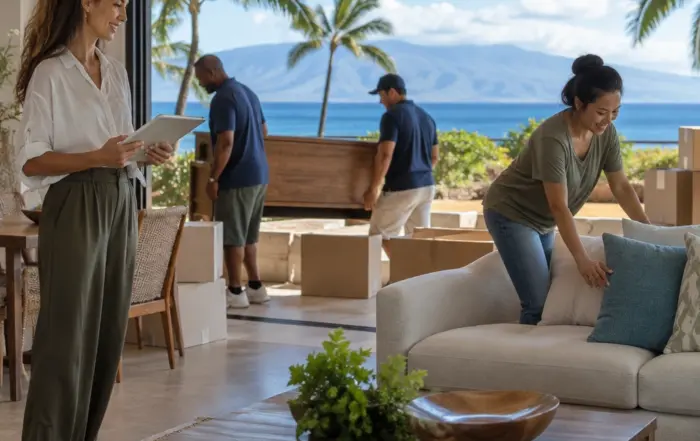
Many Maui property owners live on the mainland or elsewhere for much of the year. Furnishing a condo or home remotely is possible, but it requires more coordination than placing an online order. IDS Maui can manage the project through room-by-room composition sheets, finish samples, 3D renderings, email approvals, purchasing, receiving, freight claims, and installation.
The designer can also coordinate with property managers, contractors, architects, and builders so that furniture arrives when the home is ready—not months too early or after the owner’s visit has ended.
How long does it take to furnish a Maui home?
For many projects, allow approximately 8–12 weeks for production, plus freight time. Custom upholstery, imported materials, construction schedules, backorders, and island shipping can extend that timeline. If you want a home ready for a holiday visit or January arrival, a practical planning rule is to place major orders by August.
Quick ship can shorten the schedule, but it does not always mean immediate delivery. Ask whether “quick ship” refers to production only or includes receiving, consolidation, ocean freight, customs, local delivery, and installation. A designer can also combine quick-ship pieces with custom items so the entire room still feels intentional.
How much is freight to Hawaii?
There is no single freight price for Hawaii furniture. Cost depends on the piece’s size, weight, packaging, origin, delivery method, number of shipments, storage needs, and whether the item requires special handling. Freight should be considered before approving a purchase, especially for oversized sofas, stone tables, glass, lighting, and outdoor furniture.
Professional procurement also helps resolve problems. Industry guidance from the American Society of Interior Designers describes procurement responsibilities such as tracking custom furniture lead times, protecting specified finishes, and arranging freight so deliveries align with installation. Its overview of interior design procurement illustrates why purchasing is a specialized part of a full-service project.
What Should Vacation-Rental Owners Know Before Buying Furniture?
Vacation-rental owners should choose furniture based on occupancy, maintenance, replacement, and the property’s future use—not only on appearance. Durable upholstery, contract-grade construction, performance fabrics, sleeper sofas, protected wood finishes, and resilient dining surfaces can reduce maintenance between guests.
Maui’s regulatory environment also makes long-term planning important. Maui County approved Bill 9 as Ordinance 5909 on December 15, 2025. The ordinance phases out transient vacation rental use in apartment-zoned properties beginning January 1, 2029, in the West Maui Community Plan Area and January 1, 2031, in other areas. The Maui County announcement about Bill 9 states that more than 6,000 units are expected to return to long-term residential use, while hotel-zoned properties and other permitted visitor accommodations remain distinct.
Rules can change, and this is not legal advice. Owners should confirm the current status of their property with Maui County. From a furnishing perspective, however, the planning question is straightforward: will the home remain a resort rental, become a long-term rental, be sold, or serve as a personal residence? Each use calls for a different furniture package.
- Resort rental: performance fabrics, durable case goods, owner’s closet, sleeper options, and a planned soft-goods refresh.
- Long-term rental: easy-care materials, practical storage, comfortable lighting, and simplified maintenance.
- Personal residence: more custom upholstery, art, heirloom pieces, and highly personalized layouts.
- Remote second home: moisture planning, property-manager coordination, protective covers, and scheduled inspections.
How Much Does an Interior Designer Cost on Maui?
There is no universal interior design fee. The American Society of Interior Designers explains that designers may charge a fixed fee, hourly fee, cost-plus structure, or a combination, depending on the project and services. Its overview of interior design costs and fees also notes that custom furniture, antiques, construction changes, and revisions can significantly affect the final budget.
For Maui clients, compare proposals by scope rather than by fee alone. Ask whether the service includes space planning, selections, purchasing, freight coordination, receiving, damage claims, storage, installation, and final styling. A lower design fee may not include the project management needed to make an island delivery successful.
Conclusion: Plan Your Maui Furniture Around the Way You Live
The best designer furniture Maui homeowners buy is attractive, comfortable, appropriately scaled, and selected for the property’s actual environment. A Wailea condo, a Kula retreat, a Hana home, and a Kaanapali rental should not all receive the same furniture plan.
IDS Maui helps clients create cohesive interiors while managing the details that are easy to overlook: climate, material performance, freight, timing, installation, and remote approvals. Start with a consultation at the Makawao showroom or arrange a remote conversation about your home, budget, location, and arrival date. Call 808-891-8800 or email IDS Maui to begin furnishing your Maui residence with a plan built for island living.
Frequently Asked Questions
Is rattan or leather good for Hawaii?
Both can work when properly specified. Use finished, climate-appropriate rattan in protected areas, and choose leather for controlled indoor spaces away from direct sun and moisture.
Can I furnish my Maui condo from the mainland?
Yes. A Maui designer can manage selections, approvals, purchasing, receiving, freight claims, and installation while you are away. Build in at least 8–12 weeks of production time plus freight.
When should I hire a designer for a new build?
Bring in the designer before electrical and drywall decisions are finalized. Lighting, plumbing fixtures, appliances, built-ins, cabinetry, stone, and furniture dimensions are best coordinated early.

Meet Valorie, founder of IDS Maui, who has spent 23 years bringing colorful fabrics, clever space planning, and new technology into homes and workplaces across the Hawaiian Islands, so your project will embody the Hawaiian style.
Need Design Help With Your Maui Home?
Ask us anything — furniture, design, or where to start.