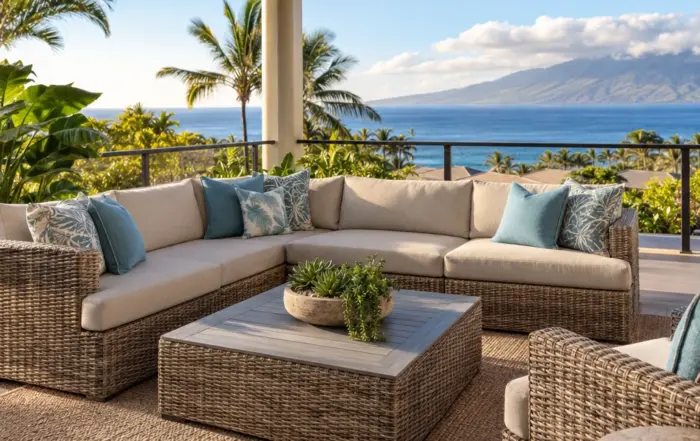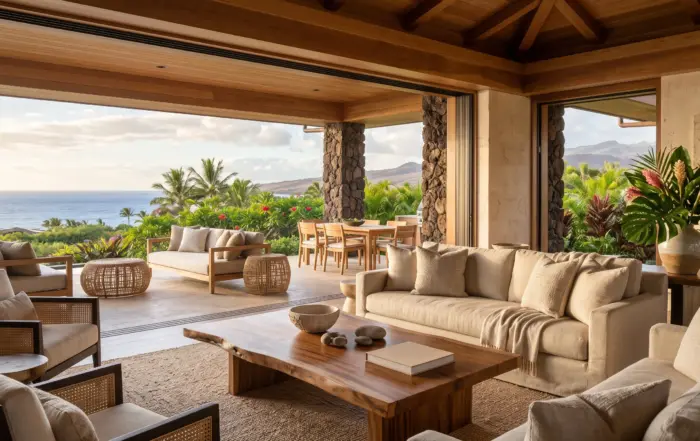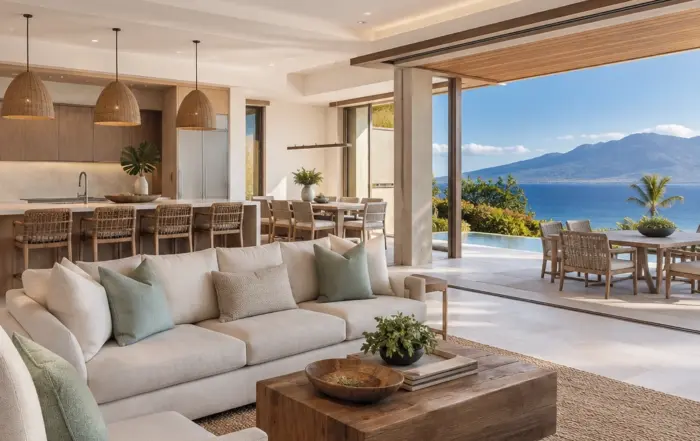
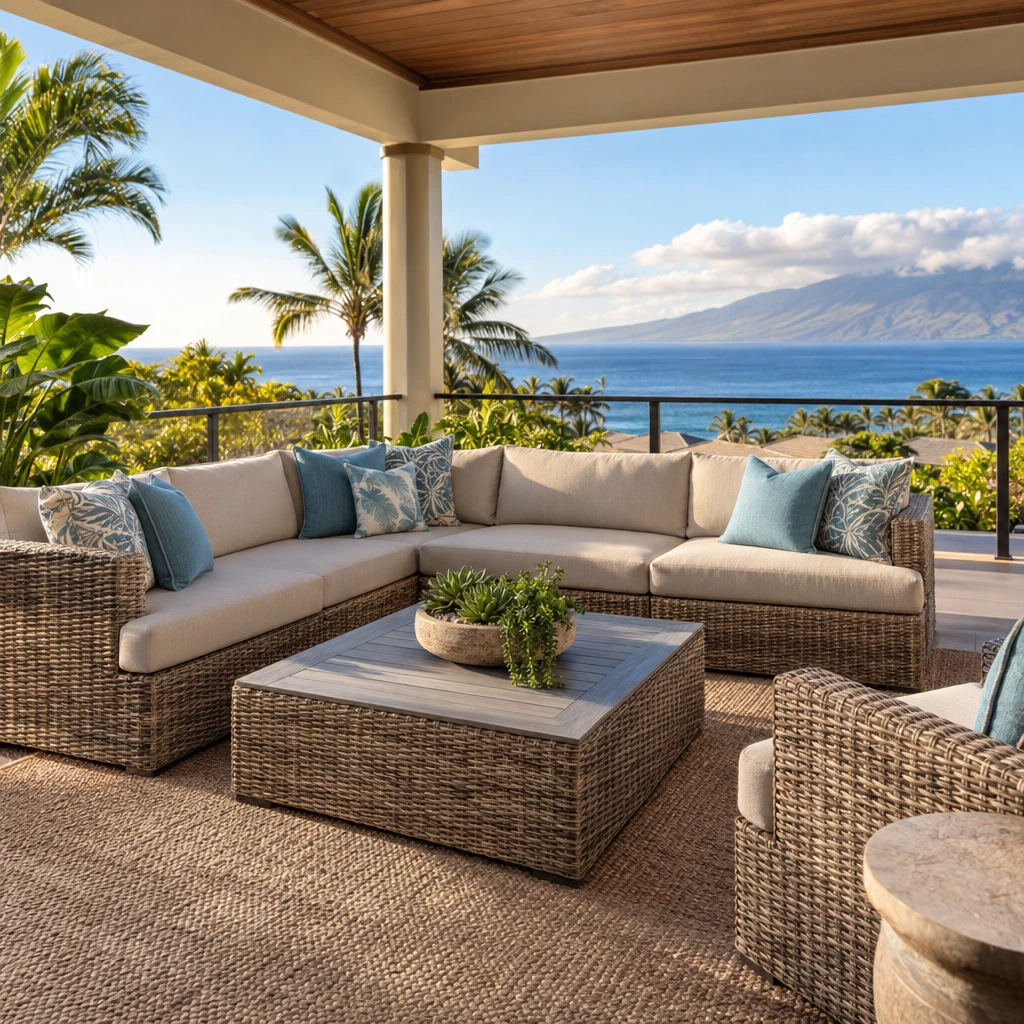
Choosing durable outdoor fabrics for your Maui lanai starts with selecting materials that can handle intense sun, salt air, humidity, and everyday use without sacrificing comfort or style. A beautiful cushion that fades, mildews, or becomes brittle within a year is not a good investment—especially when replacement pieces must be shipped to the island.
For most Maui homes, the best approach combines solution-dyed performance textiles, quick-drying cushion construction, corrosion-resistant furniture frames, and a realistic care routine. This guide explains how to compare Maui outdoor fabrics, choose weather-resistant lanai cushions, coordinate colors with your home, and protect furnishings through changing microclimates. Whether your lanai is in Wailea, Kapalua, Kihei, Makawao, or Hana, the right specifications will help your outdoor living area remain comfortable and polished for years.
Byline: Valorie Spence, ASID, owner of IDS Maui, designing Hawaii homes since 1999.
How does choosing durable outdoor fabrics for your Maui lanai protect your investment?
A Maui lanai is an extension of the home, but it experiences harsher conditions than many indoor rooms. South Maui and West Maui receive strong, consistent UV exposure and salt air. Windward areas such as Hana, Paia, and Spreckelsville tend to be more humid and wind-prone, while Upcountry locations around Makawao, Kula, Pukalani, and Haiku may need extra attention to dampness and mildew.
Durable outdoor fabrics are engineered to manage these pressures. Look for fibers that are solution-dyed, meaning the color is integrated throughout the fiber rather than applied only to the surface. This helps the fabric resist fading and makes it more forgiving when exposed to sunlight and regular cleaning.
Good outdoor fabric should also provide:
- UV resistance: Important for lanais exposed to direct afternoon sun, especially in Wailea, Makena, Kihei, Kaanapali, and Lahaina.
- Mildew resistance: Useful in humid areas, although no fabric can prevent mildew if cushions remain wet with poor airflow.
- Colorfastness: Helps preserve the appearance of bright patterns, pale neutrals, and dark solids.
- Cleanability: Performance textiles should tolerate routine spot cleaning and occasional deeper washing.
- Breathability and drainage: The fabric and cushion insert must allow moisture to escape rather than trapping it inside.
Fabric alone, however, does not determine longevity. A well-made cushion needs outdoor-rated thread, a moisture-tolerant insert, proper seam construction, and a cover that fits without excessive tension. Furniture placement matters too. Cushions pressed against a damp wall or left in standing water will deteriorate faster, regardless of the label.
Which Maui outdoor fabrics perform best in sun, salt, and humidity?
What fibers should you consider?
Solution-dyed acrylic is often a strong choice for exposed lanai seating because it offers excellent color retention, a soft hand, and broad design flexibility. It is available in solids, textures, stripes, and patterns that can look as refined as indoor textiles. For heavily used seating, acrylic performance fabrics are often specified for their balance of comfort, cleanability, and UV resistance.
Olefin is another practical option. It is lightweight, generally colorfast, and well suited to cushions, pillows, and outdoor rugs. It can be a smart choice for covered lanais or spaces where easy maintenance is a priority. Polyester performance fabrics can also work well, particularly when they include outdoor treatments and are used in partly protected areas. Their performance varies considerably by manufacturer, so specifications matter.
For dining chairs, bar stools, or locations exposed to frequent splashes, marine-grade vinyl may be appropriate. It is highly wipeable and useful in hospitality-style applications, although it may feel warmer and less breathable than woven textiles. Select it carefully for comfort and avoid using a material that makes a sunny seating area feel hot.
Are indoor-outdoor fabrics always the best option?
Not necessarily. Some indoor-outdoor fabrics are intended for covered spaces rather than constant exposure. Ask whether the textile is rated for outdoor use, how it should be cleaned, and whether the manufacturer provides test information for UV and abrasion resistance.
For salt air resistant fabric in Hawaii, prioritize the complete system: outdoor-rated fabric, stainless or corrosion-resistant hardware, quick-dry cushion inserts, and frames designed for coastal conditions. A fabric may withstand the sun, but a poorly protected zipper, staple, or metal frame can still corrode. In coastal Maui, details such as solution-dyed thread and rust-resistant fasteners are just as important as the face fabric.
How should you choose weather-resistant lanai cushions and furniture construction?
The most attractive fabric will not perform well if the cushion underneath holds moisture. For Maui lanais, cushion inserts should be selected for drainage and airflow. Quick-dry foam or reticulated foam allows water to move through the cushion more readily than conventional indoor foam. This can reduce drying time after rain or cleaning, especially when cushions are elevated from the floor.
What cushion details matter most?
- Drainage: Specify inserts and covers that allow water to escape instead of pooling at the bottom.
- Ventilation: Use breathable construction and leave space between cushions, walls, and the floor.
- Zippers: Choose outdoor-rated zippers and position them where they are protected from direct weather.
- Seams: Double-stitched or welted seams can provide a more finished appearance and improve durability.
- Removability: Removable covers make cleaning and future replacement simpler.
Furniture frames deserve equal attention. Powder-coated aluminum is lightweight and practical for many Maui settings, while teak can offer a naturally warm look when properly maintained. Marine-grade stainless steel may be suitable for selected applications, but even stainless steel can show corrosion in aggressive coastal conditions if the grade or maintenance is wrong. Woven furniture should be specifically rated for outdoor use; indoor rattan or untreated natural fibers can absorb moisture, fade, and mildew.
“Durable” also means durable for the way you live. A covered Upcountry lanai may allow more flexibility with textured fabrics and warm woven accents than an exposed oceanfront terrace. A vacation rental requires contract-grade performance, replaceable components, and fabrics that can withstand frequent guest turnover. A private home may prioritize a softer hand, tailored details, or a more residential pattern.
How can you balance UV resistant outdoor fabric in Maui with personal style?
Performance does not require a commercial appearance. Today’s outdoor textiles include bouclé-inspired textures, subtle geometrics, tropical motifs, tailored stripes, and sophisticated neutrals. Start with the architecture and surrounding landscape. A Makena lanai may call for sun-washed sand, ocean blue, or palm-inspired greens. A Kapalua home might suit deeper botanical tones, while an Upcountry residence can support warmer clay, olive, or charcoal hues that relate to the cooler landscape.
For a cohesive scheme, use the largest upholstered pieces as the foundation. Select a durable solid or restrained texture for sofas and lounge chairs, then add pattern through pillows, ottomans, or dining seat cushions. This makes future updates easier because smaller accessories can change without reupholstering every major piece.
Consider how quickly different colors show dust, sunscreen, and salt residue. Very pale fabrics can look elegant but may require more frequent cleaning. Very dark fabrics can absorb heat and reveal fading more noticeably. Mid-tone textures and small-scale patterns often provide a practical balance for active lanais.
Designers also look at the transition between indoor and outdoor spaces. If large doors open from a great room to the lanai, repeat one or two interior colors outside while using genuinely outdoor-rated materials. This creates visual continuity without putting delicate indoor textiles at risk. Performance fabrics lanai applications can include drapery, pillows, dining upholstery, and even selected outdoor curtains, provided the manufacturer’s exposure recommendations are followed.
Do not forget shade. A roof overhang, retractable shade, exterior solar screen, or strategically placed umbrella can reduce UV exposure and lower surface temperatures. Shade will not replace durable fabric, but it can extend the life of both textiles and furniture.
What care routine helps outdoor fabrics last longer on Maui?
Even the best salt air resistant fabric in Hawaii needs maintenance. Salt crystals, sunscreen, pollen, airborne dust, and bird residue can accumulate on the surface and gradually affect color and texture. A simple routine is more effective than waiting until cushions look visibly dirty.
- Brush or vacuum loose debris from cushions and upholstery regularly.
- Rinse salt and dust with fresh water when the pieces are exposed to ocean air or strong coastal winds.
- Blot spills promptly rather than rubbing them deeper into the weave.
- Use the manufacturer’s recommended mild soap and cleaning method.
- Stand cushions on edge and allow them to dry completely before stacking or storing.
- Inspect seams, zippers, frame joints, and hardware at least seasonally.
Avoid using harsh bleach, abrasive brushes, or unapproved pressure-washing settings. These can damage finishes and weaken fibers. If cushions remain damp after rain, separate them and improve airflow. This is particularly important in Upcountry and North Shore homes, where humidity can linger.
When leaving Maui for an extended period, do not simply cover wet furniture and close the lanai. Clean and dry cushions first, store vulnerable pillows in a ventilated interior space, and follow the manufacturer’s recommendations for covers. Property managers can help check for trapped moisture, mildew, corrosion, and storm-related damage while an owner is away. For remote clients, IDS Maui coordinates purchasing, receiving, freight claims, and installation so the home can be ready for arrival.
Which outdoor fabric questions do Maui homeowners ask most often?
What is the best fabric for an oceanfront Maui lanai?
Solution-dyed acrylic or another high-quality outdoor performance textile is often a strong starting point, paired with quick-dry inserts and corrosion-resistant furniture hardware. The best selection depends on exposure, shade, humidity, and how frequently the lanai is used.
Is rattan or leather good for Hawaii?
Indoor rattan and standard leather are usually poor choices for exposed lanais because humidity, UV, and salt can cause fading, cracking, or mildew. Use outdoor-rated synthetic wicker or specifically engineered performance materials instead. Leather is generally better reserved for protected interior spaces.
How often should Maui lanai cushions be replaced?
There is no fixed schedule. High-quality cushions that are shaded, cleaned, and allowed to dry may last considerably longer than cushions exposed to full sun and daily use. Inspect them annually for fading, odor, compression, brittle fabric, and weakened seams rather than replacing them solely by age.
How can IDS Maui help you select durable outdoor fabrics?
The right lanai should feel like a natural part of your Maui home—not an afterthought filled with furnishings that cannot withstand the environment. IDS Maui evaluates exposure, microclimate, architecture, maintenance expectations, and personal style before recommending fabrics and furniture. We can prepare room-by-room composition sheets and 3D renderings for approval by email, coordinate with property managers, and manage purchasing, receiving, freight, and installation while off-island owners are away.
For a lanai in Wailea, Kihei, Kaanapali, Kapalua, Makawao, or another Maui community, call IDS Maui at 808-891-8800 or email to discuss durable outdoor fabrics, weather-resistant lanai cushions, and a complete outdoor furnishing plan.

Meet Valorie, founder of IDS Maui, who has spent 23 years bringing colorful fabrics, clever space planning, and new technology into homes and workplaces across the Hawaiian Islands, so your project will embody the Hawaiian style.
Need Design Help With Your Maui Home?
Ask us anything — furniture, design, or where to start.