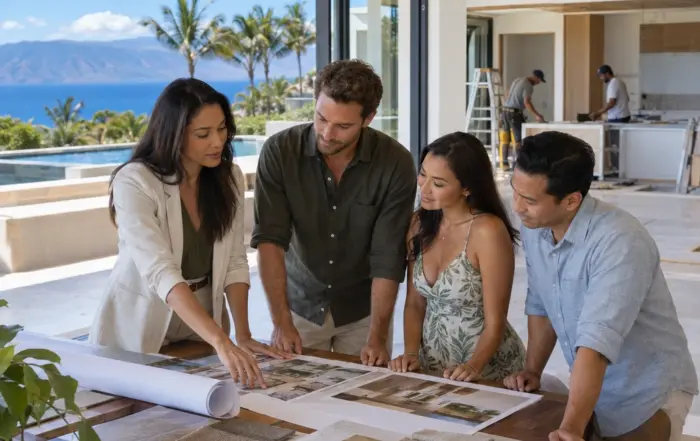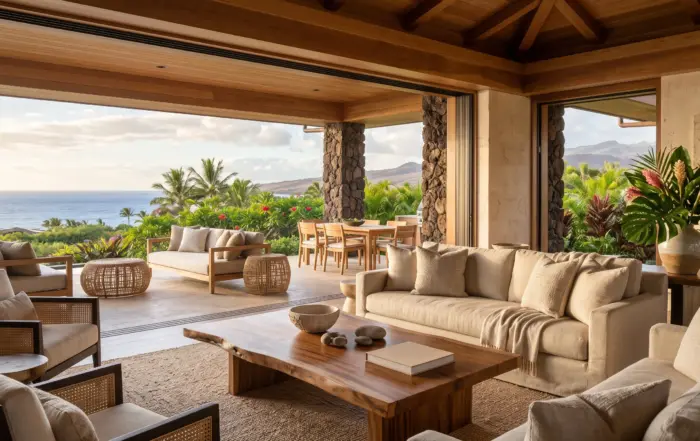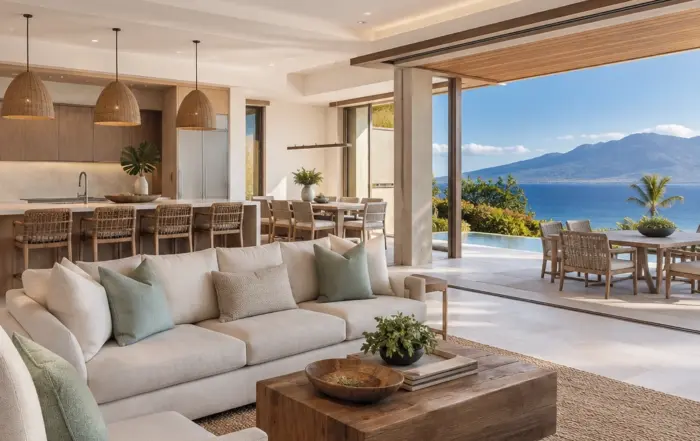
Designing a luxury home in Wailea is an investment in both your property and your island lifestyle. Whether you’re furnishing a newly built estate, refreshing a vacation rental, or transforming a condo into your permanent retreat, understanding interior design costs upfront helps you plan realistically and avoid surprises. Professional interior design services range from $2,056 to $15,256 based on your scope and designer experience, but Wailea projects often sit at the higher end of that range due to the area’s luxury market, complex logistics, and the specialized knowledge required to design for Maui’s coastal climate.
This guide breaks down what you can expect to pay when hiring an interior designer for a Wailea home, how pricing models work, what drives costs on Maui, and how to get the most value from your design investment. By the end, you’ll have a clear picture of budgeting for your project—and you’ll know exactly what questions to ask before you sign a contract.
How Much Does an Interior Designer Cost for a Wailea Home?
Interior designer costs in Wailea typically fall into several pricing tiers depending on the scope of your project, the designer’s experience, and the level of service you need. Traditional interior designers typically charge $150–$300 per hour, totaling $5,000–$20,000+ per room in design fees alone, before furniture. For a full Wailea home—especially the spacious estates and luxury condos common in neighborhoods like Wailea Golf Estates, Wailea Palms, and Papali—design fees can easily reach $50,000 to $150,000 or more when you include furnishings, freight, and installation.
The most common pricing models you’ll encounter include:
- Hourly rates: In the US, the average is about $150 an hour, and most rates fall between $50 and $450. Havenly’s cost guide (July 2026) estimates $150 to $300 an hour for a traditional designer. Experienced designers in Wailea’s luxury market often charge toward the upper end of this range.
- Flat fee per room: A single room might cost $5,000–$12,000 in design fees, with multi-room and whole-home projects priced accordingly. The designer quotes one all-inclusive price for the full scope of design work before the project begins. Typical ranges run $2,000-$12,000 for a single room and $15,000-$50,000 for larger projects.
- Per-square-foot pricing: In the US, the average is about $9 per square foot, with most quotes between $5 and $17. This model is common for new construction and large-scale renovations in Wailea’s custom home market.
- Percentage of project cost: The design fee is calculated as a percentage of your total project budget – typically 10-30%. This model is frequently used for high-end Wailea projects where construction, custom millwork, and furnishings are part of a comprehensive design build.
- Cost-plus on furnishings: US markups run from 17% to 45%, with 30% as the mid-range. The designer purchases furniture and materials at trade pricing and adds a markup, which compensates them for sourcing, procurement management, and their vendor relationships.
Most established Wailea designers use a hybrid model—for example, a flat design fee for concept work and space planning, plus cost-plus markup on furnishings and hourly billing for project management during installation.
What Drives Interior Designer Costs in Wailea?
Several factors unique to Wailea and Maui push design costs higher than mainland averages. South Maui’s hot, intense UV, and salt air environment requires materials that can withstand the coastal climate—performance fabrics, marine-grade finishes, and furniture built to resist humidity and corrosion. These specifications aren’t optional; they’re essential to protect your investment.
Freight is another major cost driver. Everything from furniture to lighting fixtures must be shipped to the island. If you’re bringing everything—beds, bookshelves, kitchen table, and a sofa or two—you’re likely looking at $6,000 to $15,000, depending on the shipping method and where you’re coming from. Lead times are longer, too—typically 8–12 weeks for production plus freight, which means orders placed by August are usually ready for a holiday or January arrival.
Wailea’s luxury market also means higher expectations. Homes here often feature vaulted ceilings, expansive lanais, open great rooms, and ocean views that demand thoughtful furniture scale and placement. Designers need to understand how to create cohesive spaces that flow from indoor to outdoor living, incorporate layered lighting for evening ambiance, and select rugs sized to anchor furniture groupings in large, open floor plans.
Interior Design Pricing Models Explained
Understanding how designers structure their fees helps you compare proposals accurately and choose the model that fits your project. Here’s how the most common pricing structures work in practice:
Hourly Billing
Designer rates ranging from $100 to $500 per hour depending on experience and location. Hourly billing works well for consultations, smaller projects, or situations where the scope isn’t fully defined upfront. The challenge is that total costs can be unpredictable if decisions take longer than expected or if the project scope expands. Always ask for an estimated hour range and clarify which activities are billable—client meetings, sourcing trips, email communication, and site visits should all be spelled out in the contract.
Flat Fee Projects
Flat fees provide budget certainty. The designer estimates the time required for the full scope of work and quotes one price. A flat fee means the designer takes on the risk if a project requires more time than planned – if the fifth or sixth round of mood boards is what it takes to get it right, that iteration is already covered under the flat fee. This model works best when the project scope is clearly defined—for example, furnishing a three-bedroom Wailea condo with a specific style direction and a defined list of rooms.
Make sure the proposal specifies what’s included: how many design concepts, how many revision rounds, whether 3D renderings are provided, and how changes outside the agreed scope are handled.
Cost-Plus on Furnishings
In this model, the designer sources furniture, lighting, rugs, and accessories at their trade discount and sells them to you at cost plus an agreed markup. Most working studios in 2026 prefer cost-plus on FF&E over percentage of project, because it cleanly separates the design fee (paid for design work) from procurement margin (paid for vendor relationships and project management). This compensates the designer for the time spent sourcing, coordinating orders, managing freight claims, and overseeing installation—tasks that are especially complex on Maui.
Ask upfront what the markup percentage is, how shipping and freight are billed, and whether you have the option to purchase items directly if you find something you love on your own.
How Long Does It Take to Furnish a Wailea Home?
Timeline is as important as budget when planning a Wailea interior design project. Depending on their scope, most designs take two to three months to complete, but that’s only the design phase. Once you approve the final design and place orders, production and shipping add another 8–12 weeks.
For remote and seasonal owners—a large portion of Wailea homeowners—this timing is critical. IDS Maui runs projects remotely for clients who live off-island most of the year: room-by-room composition sheets and 3D renderings are approved by email, purchasing and freight claims are handled while the owner is away, and the home is move-in ready upon arrival. Coordinating with property managers ensures the home is secure and maintained during the owner’s absence.
If you’re planning to use your Wailea home for the holidays or a January stay, ordering by August is the rule of thumb. Off-season risks to address before leaving include humidity control, mildew prevention, salt air exposure, termites, and proper hurricane-season lanai storage.
What Furniture and Materials Hold Up to Wailea’s Climate?
Designing for Wailea means designing for South Maui’s hot, intense UV, and salt air. If your home is in Wailea, Kihei, Lahaina, Napili, Kapalua, Ka’anapali, Paia, or anywhere close to the shoreline, salt in the air can affect how long your exterior paint lasts—and the same is true for interior furnishings exposed to open lanais and ocean breezes.
Performance and indoor/outdoor fabrics are essential for lanai furniture and high-traffic rooms. Wool rugs work well in bedrooms, but jute and sisal can mildew in humid homes. Marine-grade finishes are required for outdoor lighting fixtures, and it is a good idea to always use stainless steel hardware or oil-rubbed bronze finishes to prevent rust and corrosion.
Furniture construction matters, too. Solid wood pieces need proper sealing and maintenance. Rattan and wicker are beautiful and traditional, but they require climate-appropriate treatment. Leather can work in air-conditioned interiors but may not be ideal for humid, open-air spaces. An experienced Wailea designer will guide you toward materials that balance aesthetics with durability—furniture that looks beautiful today and still performs well five years from now.
Rugs, Lighting, and Hardware
Rugs anchor furniture groupings in Wailea’s open great rooms. Performance and indoor/outdoor rugs are ideal for lanai and high-traffic areas, while wool works for bedrooms. Size matters—rugs should be large enough to ground seating areas and define zones in open floor plans.
Lighting plans are critical in homes with vaulted ceilings and expansive lanais. Layered lighting—a mix of ambient, task, and accent lighting—creates the right mood for both daytime and evening use. Lamps from quality lines like Couture and ELK, along with fans and marine-grade outdoor fixtures, complete the design. Maui County has outdoor lighting rules that require shielded, downward-facing fixtures to reduce light pollution.
Can You Furnish a Wailea Home from the Mainland?
Yes, but it requires careful planning and an understanding of the logistics. Many Wailea homeowners live on the mainland and manage their projects remotely. The key is working with a designer who has experience coordinating freight, managing receiving and installation, and troubleshooting issues when the owner isn’t on-island.
Most shipments take between 2 to 6 weeks, depending on origin, service type, and port timing. Furniture is typically shipped via ocean freight in containers—either full-container loads for large projects or less-than-container (LCL) for smaller shipments. The average cost of moving to Hawaii ranges from $5,000 to $10,000. Port Fees Port fees range from $300 to $800, depending on weight, volume, and freight classification.
Freight isn’t just about cost—it’s about managing timelines, inspecting shipments for damage, filing claims when necessary, and coordinating delivery and installation. A local Maui designer handles these details, so your furniture arrives safely and your home is ready when you are.
Frequently Asked Questions
Do Wailea interior designers work with contractors and architects?
Yes. For new builds and remodels, bringing the designer in before electrical and drywall is critical. Lighting plans, plumbing and appliance selections, built-ins, and cabinet design are all decided early in the construction process. Designers work with your architect and builder to ensure that design intent is carried through construction. On Maui, where cabinetry, stone, and furniture all ship to the island, selections must be finalized months before project completion.
How much is freight to Hawaii for a full home furnishing?
Freight costs depend on the volume and weight of your shipment, your origin location, and whether you use a full container or shared space. If you’re bringing everything—beds, bookshelves, kitchen table, and a sofa or two—you’re likely looking at $6,000 to $15,000. Designers who manage procurement typically include freight estimates in their project proposals and handle the logistics of shipping, receiving, and installation.
When should I hire a designer for a Wailea new build?
As early as possible—ideally before electrical and drywall. Design decisions about lighting placement, outlet locations, plumbing rough-in for wet bars and outdoor kitchens, and built-in cabinetry all happen during framing and rough-in stages. Waiting until construction is complete limits your options and can result in costly change orders. Designers experienced in Wailea new builds coordinate with architects and general contractors to integrate design into the construction timeline.
Ready to Start Your Wailea Interior Design Project?
Furnishing a Wailea home is an investment in comfort, style, and long-term value. Whether you’re designing a resort-zoned vacation rental, a primary residence, or a seasonal retreat, working with a designer who understands Maui’s climate, logistics, and luxury market ensures your project is completed on time, on budget, and built to last.
At IDS Maui, we’ve been designing Hawaii homes since 1999. Our Upcountry showroom in Makawao features curated furnishings built for island living, and we manage every detail of your project—from concept and 3D renderings to freight coordination and installation—whether you’re on-island or managing remotely.
Call us at 808-891-8800 or email to schedule a consultation. Let’s create a home that’s ready when you are.
Article by Valorie Spence, ASID, owner of IDS Maui, designing Hawaii homes since 1999.

Meet Valorie, founder of IDS Maui, who has spent 23 years bringing colorful fabrics, clever space planning, and new technology into homes and workplaces across the Hawaiian Islands, so your project will embody the Hawaiian style.
Need Design Help With Your Maui Home?
Ask us anything — furniture, design, or where to start.