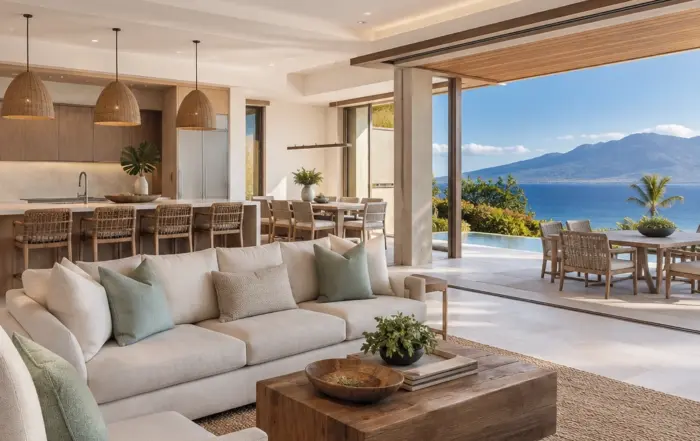
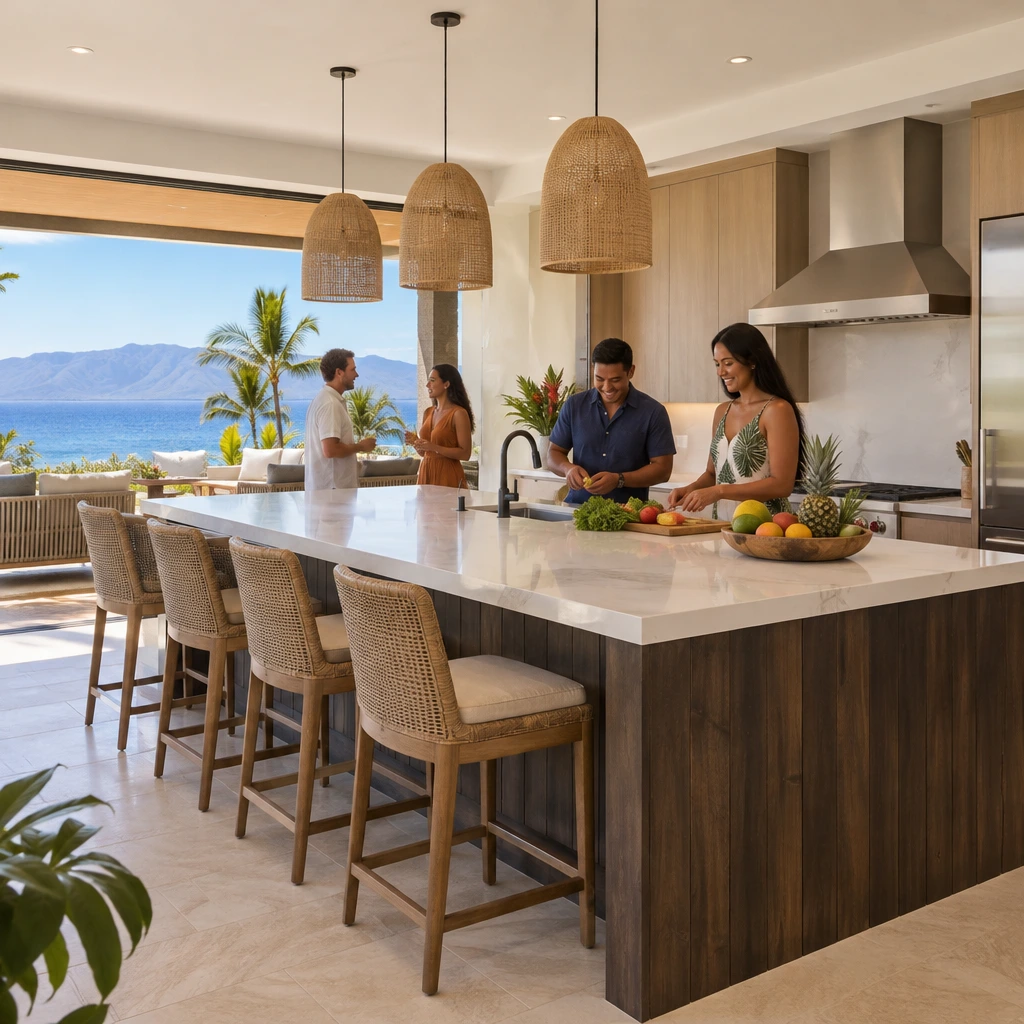
Durable and stylish kitchen islands for Maui homes start with materials chosen for the island’s specific climate, not simply the latest mainland trend. A successful Maui kitchen island design combines moisture-resistant construction, UV-stable finishes, practical storage, comfortable seating, and a look that suits the home’s setting—from a salt-air condo in Wailea or Kaanapali to a cooler, damp residence in Kula or Makawao. The island must also move smoothly through freight, installation, and daily use.
For homeowners, the challenge is balancing tropical character with long-term performance. Natural textures, generous proportions, and relaxed seating can create a beautiful focal point, while the wrong wood finish, hardware, or countertop may swell, corrode, fade, or develop mildew. This guide explains how to select kitchen island materials, plan lighting and ventilation, coordinate with contractors, and furnish remotely so your Maui home is ready when you arrive.
By Valorie Spence, ASID, owner of IDS Maui, designing Hawaii homes since 1999.
How Does Maui Kitchen Island Design Stay Durable and Stylish?
The best Maui kitchen islands are designed as hardworking architectural elements rather than oversized tables. They provide preparation space, casual dining, storage, and a visual anchor for an open great room. To achieve that balance, begin with the home’s microclimate and the island’s exposure to sunlight, humidity, salt, and daily traffic.
Which kitchen island materials perform best in Maui?
For countertops, quartz is often a practical choice because it is nonporous, easy to clean, and available in colors that complement tropical or contemporary interiors. Natural stone can also be beautiful, but it should be selected with attention to porosity, sealing requirements, and maintenance. A honed finish may conceal small scratches better than a highly polished surface, while a lighter tone can reduce the visual impact of dust and water marks.
Cabinet construction matters just as much. Favor quality plywood boxes, durable laminates, hardwood or engineered-wood doors, and finishes formulated for humid environments. Avoid unprotected materials in areas exposed to frequent splashes. Proper ventilation beneath sinks and around appliances helps limit trapped moisture.
For a tropical kitchen design, combine one or two natural accents—such as rift-cut wood, woven panels, or stone—with resilient surfaces. This creates warmth without making the entire island dependent on delicate materials. In South and West Maui, where intense UV and salt air are concerns, specify fade-resistant finishes and corrosion-resistant hardware. In Upcountry communities including Kula, Makawao, and Pukalani, give additional attention to mildew prevention and moisture control.
- Countertops: quartz, well-sealed natural stone, or other nonporous surfaces suited to heavy use.
- Cabinetry: moisture-resistant boxes, durable doors, and professionally applied finishes.
- Hardware: stainless steel, marine-grade, or high-quality corrosion-resistant finishes near salt air.
- Seating: performance upholstery, washable covers, or treated wood designed for frequent use.
- Edges and corners: softened profiles that are safer and less likely to chip.
How large should a Maui home kitchen island be?
Size should follow circulation, not ambition. Maintain approximately 42 inches between the island and the main working cabinets for a comfortable one-cook kitchen, and closer to 48 inches where two people regularly cook or appliances open into the aisle. Seating typically needs at least 24 inches of width per person, with additional knee clearance beneath the overhang.
In condos or compact Kihei homes, a streamlined island with drawers and two stools may be more useful than a large block that restricts movement. In a spacious Wailea or Kapalua residence, a longer island can include a prep sink, beverage station, seating, and concealed storage—but only if the layout remains easy to navigate.
What Makes Kitchen Islands Resistant to Maui Salt Air, Humidity, and UV?
Maui’s climate changes by location. South Maui and West Maui receive strong sun, heat, and salt air. North Shore areas such as Paia and Spreckelsville are windward and humid, while Hana is especially exposed to moisture. Upcountry homes are cooler and damp, creating different concerns, including mildew and condensation. A durable kitchen island responds to these conditions through detailing as well as material selection.
Which finishes and hardware should homeowners choose?
Choose finishes with proven resistance to fading, moisture, and frequent cleaning. A professional cabinet finisher can recommend catalyzed or factory-applied coatings appropriate for the material. For exposed hardware, stainless steel and other corrosion-resistant options are safer choices than inexpensive plated metals that may deteriorate quickly in coastal air.
Salt air-resistant furniture principles also apply to island stools and nearby case goods. Select performance fabrics, sealed or treated wood, powder-coated metal, and materials that can be wiped clean. Even indoors, homes near the ocean can experience salt residue when doors and windows remain open. Outdoor or lanai-adjacent islands require products specifically rated for exterior conditions; indoor-rated cabinetry should not be substituted.
How can homeowners prevent moisture and mildew problems?
Good airflow is essential. Use an appropriately sized range hood vented to the exterior, avoid blocking HVAC or ceiling-fan circulation, and address leaks promptly. In humid homes, allow air to move around the back and sides of furniture rather than pushing every cabinet tightly against a wall. A dehumidifier or humidity-monitoring system may be helpful, especially when a home is closed for extended periods.
Before leaving Maui for the off-season, property owners should check for plumbing leaks, clean and dry cabinet interiors, remove damp textiles, and avoid storing wet items on the island. Termite protection, hurricane-season storage, and a property-manager inspection plan are also worthwhile. These steps protect the kitchen island as well as the rest of the home.
How Should Lighting, Seating, and Storage Be Planned Around the Island?
A stylish island works because its details support daily routines. Plan the island together with the kitchen’s electrical, plumbing, appliance, and lighting layouts—not after the cabinets have been ordered. This is particularly important in a remodel or new build, when changes become more expensive after drywall and flooring are complete.
What lighting works best over a Maui island?
Layered lighting usually provides the best result: ambient lighting for the room, task lighting over the work surface, and decorative fixtures that establish mood. Pendants can add scale and personality, but they should not obstruct sightlines across an open living area. For vaulted ceilings, confirm fixture proportions, mounting details, and access for future maintenance.
Dimmable LED lighting with a warm color temperature can complement wood, stone, and woven textures without making the room feel harsh. Under-cabinet lighting improves food preparation and reduces shadows. If the island includes a sink or cooktop, coordinate fixture placement with the faucet, hood, and ceiling structure early.
How can an island provide useful storage?
Use drawers for cookware and utensils, deep drawers for pots, and narrow pullouts for trays or spices. A dedicated recycling area, appliance garage, beverage drawer, or concealed charging station can reduce countertop clutter. If the island serves a vacation home, include storage for entertaining supplies and durable dishware rather than designing solely around everyday cooking.
For seating, consider the island’s height and the household’s habits. Counter stools are generally more versatile than bar-height seating, while a lower table extension may be better for children or older adults. Performance upholstery and easily replaceable seat covers are valuable in vacation homes, especially where the kitchen is part of a high-use open living space.
How Long Does It Take to Furnish a Maui Home and Arrange Island Installation?
Custom cabinetry, countertops, stools, lighting, and related furniture often require more lead time in Hawaii than homeowners expect. A practical planning allowance is 8–12 weeks for production, plus freight and local receiving. Custom or imported items may take longer, so selections should be finalized well before the desired move-in date.
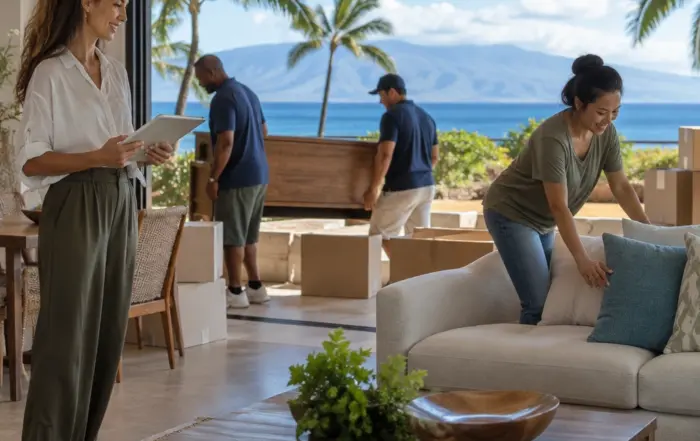
For a holiday or January arrival, orders placed by August are typically the safest starting point. Freight to Hawaii varies by item size, origin, shipping method, crating, delivery address, and whether the shipment is consolidated. A designer can help build a realistic landed-cost estimate that includes purchasing, receiving, delivery, installation, and possible freight claims rather than quoting only the mainland purchase price.
Can an island project be managed remotely?
Yes. Many Maui homeowners live off-island for much of the year. IDS Maui coordinates remote projects with room-by-room composition sheets, finish samples, and 3D renderings approved by email. Purchasing, receiving, freight claims, and installation can be managed while the owner is away, with coordination among property managers, architects, builders, and contractors.
For a new build, bring the designer in before electrical and drywall decisions are complete. Island dimensions, appliance locations, plumbing, outlets, lighting, cabinet details, and flooring transitions all affect one another. Early coordination prevents costly revisions and allows the kitchen island to feel integrated rather than added at the end.
What Should You Ask Before Ordering a Durable Kitchen Island?
Before approving the final design, review the island as both furniture and infrastructure. Ask whether the selected materials are appropriate for the home’s microclimate, whether replacement parts are available, and how the surfaces should be cleaned. Confirm the location of shutoff valves, outlets, ventilation, and appliance clearances. Also review how the island will be protected during freight and installation.
For remote owners, establish who will inspect delivered pieces, document damage, and approve repairs. A well-organized receiving process is especially important because freight claims often require photographs, packaging documentation, and prompt notification. The goal is not simply a beautiful rendering; it is a finished kitchen that functions properly on arrival.
Conclusion: How Can You Create a Maui Island That Lasts?
Durable Maui home kitchen islands combine climate-appropriate materials, thoughtful circulation, layered lighting, resilient seating, and careful project scheduling. Quartz or well-maintained stone, quality cabinetry, corrosion-resistant hardware, performance fabrics, and strong ventilation can help an island withstand Maui’s sun, salt, humidity, and everyday activity. Just as importantly, the design should reflect the home’s location, whether it is a coastal condo in Wailea, a West Maui retreat, or an Upcountry residence in Kula.
IDS Maui can coordinate selections, purchasing, freight, installation, and remote approvals from concept through completion. To discuss your kitchen island or full-home furnishing project, call 808-891-8800 or email IDS Maui.
Frequently Asked Questions
Is rattan or leather good for a Maui kitchen?
Both can work when properly selected. Use treated, well-finished rattan in suitable interior locations and choose high-quality, protected leather away from direct sun and persistent moisture. Performance textiles may be the better choice for heavily used seating.
What is quick ship?
Quick ship refers to products kept in stock or produced on an expedited schedule. It can reduce production time, but freight, receiving, installation, and availability still need to be confirmed before relying on a delivery date.
Can IDS Maui work with my contractor or architect?
Yes. IDS Maui coordinates with clients’ architects, builders, contractors, and property managers, including remote homeowners who approve plans and 3D renderings by email.

Meet Valorie, founder of IDS Maui, who has spent 23 years bringing colorful fabrics, clever space planning, and new technology into homes and workplaces across the Hawaiian Islands, so your project will embody the Hawaiian style.
Need Design Help With Your Maui Home?
Ask us anything — furniture, design, or where to start.