Maui’s post-wildfire furniture trends in 2026 are being shaped by more than color palettes and showroom style. As Lahaina and other affected communities move from cleanup toward long-term rebuilding, homeowners are making furniture decisions around resilience, comfort, flexibility, and a renewed sense of place. The latest recovery update from Governor Josh Green reported that 100% of wildfire debris had been cleared, with 667 building permits issued and 577 homes completed across Maui as of August 3, 2026. That progress means more residents, second-home owners, and vacation-rental operators are now reaching the furnishing stage.
For these projects, the question is no longer simply, “What looks coastal?” It is, “What will perform well in Maui’s climate, support everyday life, and still feel personal years from now?” This guide explores the most important Maui furniture trends 2026 buyers can expect, from durable indoor-outdoor pieces to warmer, more character-rich interiors. It also explains how post-wildfire rebuilding is influencing lead times, planning, materials, and the way homeowners furnish a renewed Maui property.
Maui’s Post-Wildfire Furniture Trends: Resilience Becomes Part of the Design
In 2026, furniture selection is increasingly being discussed alongside construction quality, wildfire preparedness, and long-term maintenance. Recovery is not happening in isolation: furnishings must work within newly rebuilt homes, updated floor plans, improved ventilation systems, changing insurance requirements, and evolving community plans.
The state has emphasized that rebuilding is intended to support both a return to home and a stronger future for Lahaina. Community input has helped shape priorities including cultural character, walkability, accessibility, public spaces, and support for local businesses, according to the State of Hawaii’s Maui recovery update. That broader vision is likely to influence interiors as well. The most successful homes will feel modern and safe without appearing generic or disconnected from Maui.
What resilient furniture looks like in practice
Resilient furniture is not necessarily industrial, stark, or visually heavy. Instead, it combines thoughtful construction with materials that can handle daily use, strong sunlight, salt air, humidity, and frequent cleaning. In a living room, that may mean a well-built sofa with performance upholstery, replaceable cushions, and a frame designed for years of use. In a dining area, it may mean a solid table with a durable finish rather than a fragile veneer that cannot be refinished.
- Performance fabrics: Look for fibers and finishes suited to sunlight, spills, and regular use.
- Solid, repairable construction: Quality frames, durable joinery, and replaceable components can extend a piece’s life.
- Stable finishes: Choose wood tones and coatings that can tolerate Maui’s climate rather than fading or whitening quickly.
- Flexible layouts: Modular sectionals, movable ottomans, nesting tables, and occasional chairs make rooms easier to adapt.
- Documented purchases: Keep invoices, specifications, and photographs for insurance, warranty, and future replacement purposes.
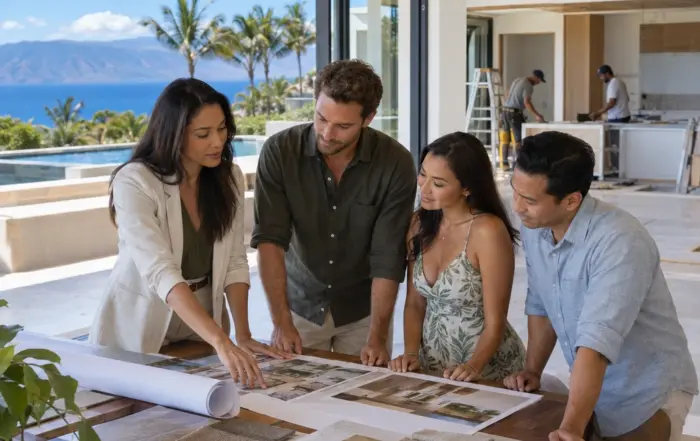
For homeowners rebuilding after a loss, documentation is especially valuable. A professional furniture plan can record dimensions, finishes, fabrics, quantities, and replacement values before orders are placed. It can also reduce the risk of buying pieces that fit the room visually but conflict with door clearances, electrical plans, built-ins, or accessibility needs.
Warmer, More Personal Interiors Replace Generic Coastal Style
One of the clearest Maui furniture trends 2026 buyers can expect is a move away from overly coordinated “beach house” interiors. White slipcovers, pale gray upholstery, and mass-produced rattan may still have a place, but they are increasingly being balanced with richer woods, expressive artwork, patterned fabrics, handmade accessories, and furniture that looks collected over time.
This shift is also visible in national design coverage. ELLE DECOR’s 2026 furniture trend report points to the growing popularity of soft, organic silhouettes and curving forms. On Maui, those shapes can create a more relaxed atmosphere while softening the harder lines often found in newly constructed homes.
Natural materials with more depth
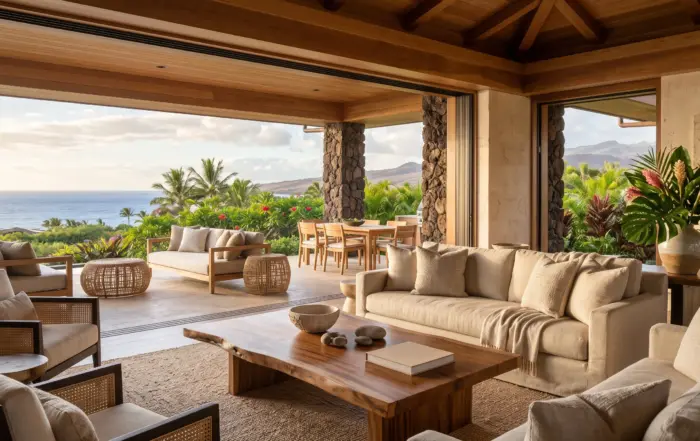
Expect to see more walnut, oak, teak, woven fibers, stone, linen blends, leather, and tactile upholstery. The goal is not to recreate a rustic lodge or a themed tropical resort. Instead, designers are layering materials so that a room feels grounded and connected to its surroundings.
A sculptural accent chair might sit beside a clean-lined sofa. A contemporary dining table may be paired with woven or upholstered chairs. A natural wood chest can provide warmth against plaster, tile, or polished concrete. These combinations feel more individual than a complete matching suite and allow homeowners to express their history, travels, and connection to Hawaii.
Color will also become more nuanced. Because Hawaii’s intense natural light changes how paint, fabric, and finishes appear indoors, a color that feels soft and muted on the mainland may look much brighter or cooler in Maui. Earthy greens, deep ocean blues, clay, ochre, charcoal, warm white, and sun-washed neutrals can work beautifully, but they should be tested in the actual room at different times of day.
IDS Maui’s color and fabric expertise is particularly relevant here. With 27 years of Hawaii-specific experience, the showroom helps clients evaluate how upholstery, wood, rugs, lighting, and wall colors will interact with Maui’s equatorial light instead of relying on mainland assumptions.
Indoor-Outdoor Living Maui: Furniture Must Work Harder
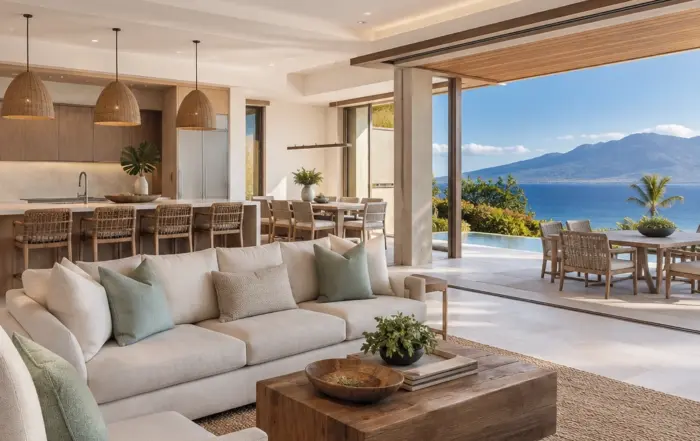
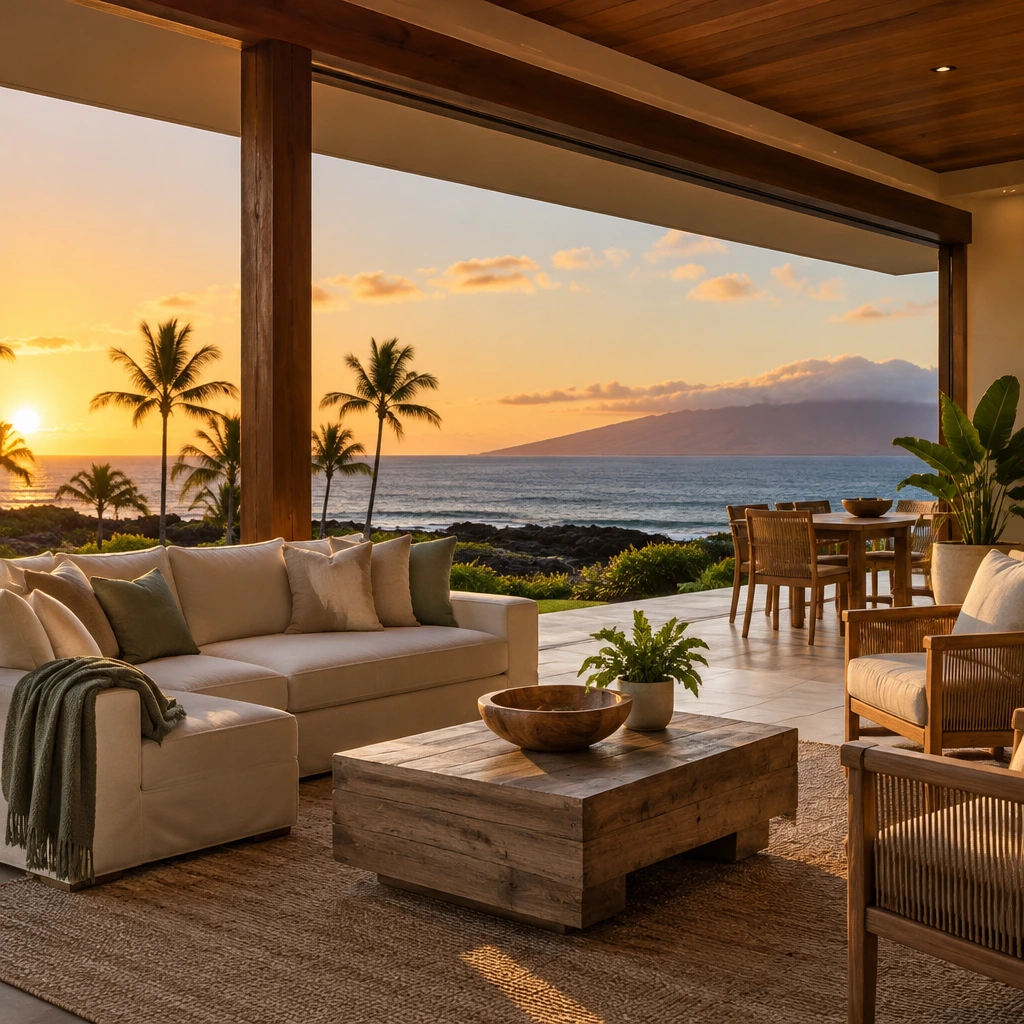
Indoor-outdoor living Maui homeowners enjoy year-round is becoming more integrated into furnishing plans. Lanai spaces are no longer treated as an afterthought furnished with a few temporary chairs. They are being designed as genuine extensions of the home for dining, lounging, entertaining, and quiet recovery.
That means outdoor furniture needs the comfort and visual quality expected indoors, while indoor furniture must often withstand open doors, windblown dust, humidity, and traffic between spaces. A successful plan considers the entire transition: flooring, lighting, rugs, window treatments, seating, storage, and the relationship between the kitchen, living room, lanai, and garden.
Choosing pieces for lanai and resort-style use
For outdoor areas, prioritize materials and upholstery specifically rated for exterior conditions. Powder-coated metals, properly maintained teak, performance fabrics, and quick-drying cushions can be strong choices, but each material still requires appropriate care. Salt air and intense sun can degrade finishes faster than many homeowners expect.
Look for:
- Deep seating that remains comfortable without absorbing excessive moisture.
- Outdoor rugs that resist fading and can be cleaned easily.
- Tables with stable bases and finishes suited to wind and sun exposure.
- Storage for cushions, throws, games, and entertaining supplies.
- Lighting that supports evening use without creating glare indoors.
Inside the home, a durable rug can visually connect the living area to the lanai. Matching every piece is not necessary; repeating a finish, color, or texture is often enough to create continuity. For vacation rentals, this approach can make the property feel polished while avoiding a disposable, overly themed look.
Hospitality experience is valuable in this setting. Resort furnishings are selected with traffic, maintenance, replacement cycles, and guest comfort in mind. IDS Maui brings that perspective to residential and vacation-rental projects while offering furniture, lighting, rugs, accessories, and custom pieces that can be ordered directly from manufacturers.
Custom and Made-to-Order Furniture Will Matter More in 2026
Rebuilding often produces homes with different dimensions from the properties that came before them. New floor plans may include wider circulation paths, larger windows, improved accessibility, more storage, or rooms that serve multiple purposes. Standard furniture may not fit those spaces as efficiently as it once did.
That is why custom and made-to-order furniture is becoming a more practical part of post-wildfire rebuilding. A sofa can be ordered in a specific length. A dining table can be sized for the room and the number of family members. A bed, dresser, or console can be configured around architectural details instead of forcing the architecture to accommodate an off-the-shelf item.
Plan earlier than you think
Furniture should be discussed while the home is still in design development, not after construction is complete. Dimensions affect outlet locations, lighting placement, walkway clearances, window treatments, built-ins, and even the location of ceiling fixtures.
Made-to-order furniture commonly requires several weeks, while custom work may take longer depending on the manufacturer, materials, and shipping schedule. Hawaii freight also adds another layer of planning. IDS Maui estimates freight to Hawaii at approximately 10–15% of item cost, priced by cubic footage, and coordinates freight and damage claims for clients.
For remote homeowners, this coordination can be particularly important. A second-home owner living on the mainland may need one team to manage selections, approvals, purchasing, shipping, receiving, inspection, installation, and final placement. A detailed schedule helps prevent a completed home from sitting empty while essential furniture is still in transit.
Furniture Planning Will Follow a More Holistic Recovery Mindset
Post-wildfire rebuilding is not only about replacing objects. For many families, furnishing a home again involves memory, identity, grief, and the desire to create a sense of safety. The best interiors will therefore balance practical performance with emotional meaning.
That may involve incorporating restored photographs, locally meaningful artwork, heirloom pieces, or new furniture selected to represent a fresh chapter. It may also mean creating quieter spaces: a comfortable reading chair, a shaded lanai, a bedroom with calming textiles, or an adaptable guest room that can support family members during transitions.
Recovery planning is also continuing beyond the first wave of construction. The County of Maui has promoted the Hoʻokumu Hou single-family homeowner reconstruction program, with home designs and floor plans intended to feel familiar, resilient, and rooted in the Lahaina community. The program’s application deadline was extended through August 2026, according to Maui Nui Strong’s reconstruction program announcement.
That emphasis on familiarity and community identity offers an important lesson for furniture selection: the trend is not to make every rebuilt home look the same. It is to create homes that are durable, welcoming, and distinctly connected to the people who live there.
Plan Your 2026 Maui Furniture Project with IDS Maui
The most successful post-wildfire interiors will combine resilience with beauty, and flexibility with a strong sense of place. Expect to see warmer woods, organic silhouettes, layered color, better indoor-outdoor transitions, performance fabrics, and more custom furniture designed around each home’s architecture. Just as importantly, expect homeowners to plan earlier and consider freight, climate, maintenance, and future use before placing orders.
IDS Maui has served Hawaii for 27 years, offering direct access to furniture and accessory lines that are often unavailable elsewhere on Maui. The showroom can help with individual furniture purchases or complete furnishing plans for a new residence, vacation rental, or second home. Services include furniture, lighting, rugs, accessories, custom bedding, made-to-order pieces, AutoCAD drawings, 3D renderings, purchasing, shipping, and installation coordination.
Visit IDS Maui at 3031 Old Haleakala Highway in Makawao, Monday through Friday from 10 a.m. to 6 p.m., or call 808-891-8800 to discuss your project. Whether you are rebuilding after the fires, furnishing a new Maui home, or refreshing an indoor-outdoor retreat, early planning can help you create a space that is comfortable, personal, and built for island life.

Meet Valorie, founder of IDS Maui, who has spent 23 years bringing colorful fabrics, clever space planning, and new technology into homes and workplaces across the Hawaiian Islands, so your project will embody the Hawaiian style.
Need Design Help With Your Maui Home?
Ask us anything — furniture, design, or where to start.